
• About
  • Books I’m Reading
  • Links

Reflections of a Lay Catholic

Reflections of a Lay Catholic

Tag Archives: Reconciliation

How to Make a Thorough Examination of Conscience – Part 2: The CPR Method

01 Wednesday Apr 2020

Posted by Jerry Robinson in Examination of Conscience, Reconciliation

≈ 2 Comments

Tags

Examination of Conscience, Reconciliation, Sin, Sins of Commission, Sins of Omission

On Monday I posted Spiritual Atrophy and the Need for an Examination of Conscience During Self-Isolation in which I emphasized the dangers of letting our spiritual lives decline and go flat since we cannot make it to Holy Communion. Unless a special effort is made we will experience a gradual decline that likely will lead to venial or mortal sin. Since the Ten Commandments are all about relationships with God and each other, any sin can damage those relationships. The mechanism we use to recognize our sins is called an Examination of Conscience.

In yesterday’s post, How to Make a Thorough Examination of Conscience – Part 1: The “Checklist” Method, I discussed the two types of sin: mortal and venial, and non-sins which we call imperfections, as well as general principles behind a good examination. And, I provided links to examples of questions, or “checklists”, that, when asked of ourselves and viewed from God’s perspective, will help identify our sins.

Because I was in a rush to finish the post I forgot to mention a couple things. First, the questions asked in this method are normally “Yes” or “No” questions. They are very specific and intended to pinpoint those actions for which you may not be too proud. They will not only expose your sins of “commission” (the things you did but shouldn’t have done), but also your sins of “omission” (the things you should have done but failed to do).

The second point I forgot to mention is that there are “checklists” designed for one’s particular state in life. Besides the general lists of questions for anyone, there are sets for children, young adults, singles and married people. An excellent place to find these is on the Laudate app which you can get for your mobile phone. It is an essential tool for anyone interested in consistently practicing and growing in their faith. A very good list for married people can also be found at Beauty So Ancient: A Wonderful Examination of Conscience for Married Couples.

By utilizing one of these lists of questions on a regular basis, a person can nearly memorize those areas that tend to come to the surface. It’s important to not skim over the small stuff. The small stuff can become big stuff.

Today, I want to introduce a second method called the CPR Method of examining one’s conscience. I discovered this method from the Laudate app. Unlike the “checklist” method, this one doesn’t ask specific “Yes” or “No” questions. Rather, it asks you to look at your day subjectively rather than objectively. (The following is copied directly from Laudate):

C = Claim Your Blessings

Reflect on the good things that happened to you today, and explicitly recognize God’s hand in them. He has been loving you every minute of the day, thinking about you, drawing close to you. Thank Him for the little blessings and the big ones. See His gaze of love directed toward you. Ask Him to help guide these few minutes of prayer.

P = Pinpoint Victories and Losses

Taking a kind of “helicopter” view of the activities of the day, examine how you lived them. Where were you selfish in your decisions, attitudes, words, and actions? Where were you virtuous and generous? Also, examine how you responded to the Holy Spirit’s inspirations throughout the day. As you do this, ask for (and accept!) God’s forgiveness for the times you gave in to selfishness or temptation, and thank Him for the graces He gave you to do good and to be faithful to His will.

R = Renew Your Loving Commitment to Christ

Finish by renewing your faith in God and your desire to know Jesus more clearly, to love Jesus more dearly, and to follow Jesus more nearly every single day. If possible, make a specific resolution (proposal of amendment) regarding something you will have to do tomorrow – something you can do to show Christ your love in a concrete way. End with an Our Father, a Hail Mary, and the sign of the cross, or another favorite prayer.

This method is best practiced after one has spent some time using the previous method and getting used to their various faults. I particularly like this method because to begin requires placing yourself in the presence of God, recognizing His love for you, and returning your love back to Him. And, making a resolution in the third step is a sign to God that you really do want to make the effort to grow in virtue and closer to Him. As I mentioned yesterday, this is really what it’s all about – amending your ways and refraining from near occasions of sin in the future.

Tomorrow I will introduce you to the third method of examining your conscience: The Analytical Method.

God bless you all. Be safe and stay healthy. I pray you use some of your newly found free time growing close to God.

(How to Make a Thorough Examination of Conscience – Part 2: The CPR Method was first published on the blog Reflections of a Lay Catholic)

©2013-2020 Reflections of a Lay Catholic. Reposting and sharing of material in its full and original content is permitted, provided that full and clear credit is given to the author(s) and Reflections of a Lay Catholic.

How to Make a Thorough Examination of Conscience – Part 1: The “Checklist” Method

31 Tuesday Mar 2020

Posted by Jerry Robinson in Examination of Conscience, Reconciliation

≈ 7 Comments

Tags

Examination of Conscience, Mortal Sin, Precepts of the Church, Reconciliation, Sin, Ten Commandments, Venial Sin, Virtue

In yesterday’s post Spiritual Atrophy and the Need for an Examination of Conscience During Self-Isolation I promised to provide various methods of making a thorough examination of conscience. The first of the three ways I will offer is what I call the “Checklist” method. This, I believe, is the most common form used and the best for anyone who does not regularly make an examination, and for those just beginning.

However, before we look at this method, let’s take a more general look at why we should do an examination of conscience, and what to look for.

An examination’s main purpose is to help us see which actions and/or attitudes we have exhibited that are sinful or less than desirable so that we can make amends. We need to know these so we can stop sinning in a particular way and make changes to get better at obeying God’s Commandments and trying to live lives of virtue.

In making our examination, we particularly want to look at the sin and its gravity, that is, it’s seriousness – is it a mortal sin, a venial sin, or simply an imperfection.

Mortal sins are those sins which deplete our souls of sanctifying grace. Three things are necessary for a sin to be mortal:

  • It has to be serious (grave);
  • One has to have knowledge or a firm belief that the act is seriously wrong prior to committing the act;
  • One must commit the act with full consent of one’s will.

All three of these things must be present for a sin to be considered mortal. Thus, if you did not know the act was of serious nature, or if you did not will it, e.g. you were forced to commit it or it was committed in a dream, then you are not guilty of committing a mortal sin.

All mortal sins committed since one’s last confession must be confessed, both the nature of the sin and how many times it was committed. It’s important to remember that one needs to confess all mortal sins prior to receiving communion as receiving communion while not in a state of grace is itself a mortal sin.

Venial sins are those committed which are not grave in nature or were not committed knowingly such as those committed out of habit. Venial sins are not required to be confessed in the Sacrament of Reconciliation however it is good practice to do so. By bringing these into the light of Christ’s forgiveness, we more easily grow in the virtue of humility. It helps us pay attention to our actions so that we may refrain from sinful habits and, thus, grow in holiness.

Imperfections may include dispositions of one’s soul that are not necessarily sinful but which one would like to amend. It is not necessary to bring these to confession but it is a good idea to be aware of them and the habits from which they originate. These are areas that could become sinful if left unchecked. They could be those little things that weigh on the conscience of someone who is earnestly trying to grow in holiness. Examples of imperfections may include: trying to be controlling instead of seeking God’s will; being content with spiritual mediocrity; failing to defend the Church; failing to spend time in prayer; or taking your spouse or a parent for granted.

As I mentioned above, the most common method of examining one’s conscience is what I dub the “Checklist” method. This entails reading a printed list of questions that are based on the Ten Commandments, the Precepts of the Church, and the Cardinal, Theological, and Capital Virtues; and then reflecting on your actions from God’s perspective, to uncover one’s sinful instances. Below, I am providing links to various websites that offer these checklists, all of which, except for the last one, are printable. Note that they are all a little different. Some may frame a question in such a way that it helps to determine if a sin is mortal or venial. Some may not make the distinction but leave it up to you to decide.

Of course, it doesn’t do much good to do an examination of conscience if you don’t intend to try and amend your ways and refrain from sinning again or avoiding future near occasions of sin. That’s what it’s all about.

Tomorrow I will present a second method of examining one’s conscience: the CPR method.

God bless you all!

Links:

  • Examination of Conscience for Adults and Teens, The Fathers of Mercy
  • Detailed Examination of Conscience, Bulldog Catholic (University of Minnesota-Duluth Newman Center)
  • An Examination of Conscience, Loyola Press (short and sweet)
  • A Brief Examination of Conscience based on the Ten Commandments, USCCB
  • The Light is on for you, A guide to making a thorough examination of conscience and a good confession
  • An Examination of Conscience by Fr. Robert Altier, The Leaflet Company ($1.25 per copy, this is my preferred resource)

(How to Make a Thorough Examination of Conscience – Part 1: The “Checklist” Method was first published on the blog Reflections of a Lay Catholic)

©2013-2020 Reflections of a Lay Catholic. Reposting and sharing of material in its full and original content is permitted, provided that full and clear credit is given to the author(s) and Reflections of a Lay Catholic.

Spiritual Atrophy and the Need for an Examination of Conscience During Self-Isolation

30 Monday Mar 2020

Posted by Jerry Robinson in Reconciliation

≈ 5 Comments

Tags

Actual grace, Confession, Examination of Conscience, Ez 33:11, Jn 8:1-11, Reconciliation

I pray this finds you physically, emotionally, and spiritually healthy on this nth day of your isolation. Hang in there, this storm shall pass. Talking about storms – the thunderstorms that galloped through our area of southwest Ohio the night before last were replaced with beautiful sunshine and cloudless skies today. A sign, perhaps, to not lose hope.

Today’s Gospel is from Jn 8:1-11, the story of the adulterous woman. After Jesus challenged the accusing Pharisees to cast the first stone at the woman only if they themselves were without sin, they all departed without further condemnation. Likewise, Jesus, out of his great and merciful love told the woman, “Neither do I condemn you. Go, and from now on do not sin any more.”

In the verse before the Gospel, God speaks through His Prophet Ezekiel, “I swear I take no pleasure in the death of the wicked, but rather that they turn from their ways and live.” (Ez 33:11)

Our God is a God of second chances, and third chances, and fourth…. He loves us so much that as long as we earnestly try to turn from our evil ways, from our sinfulness, He will not condemn us. And, to allow us to receive His loving mercy and forgiveness, He has given us the Sacrament of Reconciliation. Although the communal penance services that are normally offered during Lent have, like Mass, fallen casualty to the social distancing precautions of the pandemic, confessions are still being heard on a normal and regular basis in most parishes.

I know many of you are using this time of isolation to grow spiritually in your relationship with God. You’re staying spiritually active by watching live-streamed masses, praying a Rosary daily, and living charitably by reaching out to help others in need. Perhaps you’re focused on fulfilling the obligations of your God-given vocation by getting things done around the house. Maybe you’re the husband who’s been telling your wife, “I’m going to do it, you don’t have to remind me every six months!”

I also know that for many, especially for those who have lost their jobs, or have taken on the responsibility of home schooling their children, life is difficult and frustrating. You may be in desperation mode and the last thing on your mind is your spiritual health.

But, I also suspect there are many who are using this time as a hiatus from their spiritual lives. Although it may not be intentional, their spiritual lives may have waned, or atrophied, simply because they cannot go to mass on Sundays as they have been accustomed. Atrophy is defined as “a gradual decline in effectiveness or vigor due to underuse or neglect”. It is a progressive decline that can happen so slowly we don’t even notice it.

The cure for atrophy is action – that is, to create a force to overcome the inertia of inactivity, sloth, and procrastination. Spiritually, God has given us that cure in the form of actual grace, the gift that helps us conform our lives to His will. It’s the same grace that urges us to go to the Sacrament of Reconciliation when we’re in a state of mortal sin and bankrupt of sanctifying grace.

I have been trying to stay spiritually alive during my isolation. But, after reading this morning’s Scripture I see where I’ve unconsciously neglected an important part of my daily prayer life: my nightly examination of conscience. My wife and I have taken this opportunity to do more things together and one of those things is putting together jigsaw puzzles, something we enjoy. We just finished our sixth, one thousand-piece puzzle in the last two weeks. We’ll start one after dinner and, since it takes us about six hours to complete one, we may not get to bed before one o’clock in the morning. By then I’m mentally wasted and too tired to remember to do my examen before turning in. Left unchecked, this can be a slippery slope.

God wants us to turn away from our sin and turn back to Him. The mechanism to begin that about face where we can know our sins, both mortal and venial, is through an examination of conscience. To paraphrase St. Augustine, it means to turn inward and see God as our witness in everything that we do. It means asking ourselves if we are following the Ten Commandments, the Precepts of the Church, and if we are imitating Christ by living lives of virtue. The answers will tell us what we need to work on and what we ought to take with us to the Sacrament of Reconciliation.

If you regularly make an examination of conscience, now is not the time to stop. Rather, it’s a good time to double down and concentrate on those personal faults and failings that impact our relationships since, for many, it is our relationships with family and God that are easily strained under the current circumstances of our isolation.

If you do not regularly make an examination of conscience, or if you do but want to be more thorough, I will, over the next few days, provide various methods of making a thorough examination of conscience. Check in tomorrow as I offer what I call the “Checklist” method. Until then, God bless you and stay healthy.

“Loving and merciful God, thank You for the grace to realize that I am a sinner and that I need to always bring into the light those areas where I fall. Thank You for the grace to make an examination of conscience and then, with a contrite heart, bring my sins to You in the Sacrament of Reconciliation. And, thank You for Your forgiveness, always giving me another chance to do Your will and follow the lead of Your Beloved Son, Jesus. Amen.”

(Spiritual Atrophy and the Need for an Examination of Conscience During Self-Isolation was first published on the blog Reflections of a Lay Catholic)

©2013-2020 Reflections of a Lay Catholic. Reposting and sharing of material in its full and original content is permitted, provided that full and clear credit is given to the author(s) and Reflections of a Lay Catholic.

Do You Not Yet Have Faith?

28 Sunday Jan 2018

Posted by Jerry Robinson in Bible Reflections, Blessed Sacrament, Confession, Eucharistic Adoration, Faith, Fear, Prayer, Reconciliation

≈ 9 Comments

Tags

Desert, Faith, I Trust In You, Jesus, Mark 1:21-28, Mark 4:40, Prayer, Reconciliation, Reflection, Spiritual Warfare

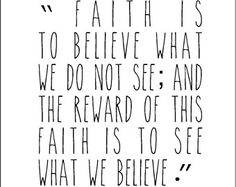
be4fc9a0bc4db463abe2916c274ce6fa--palm-sunday-sunday-quotes

– St. Augustine

God continues to work in my life! And, after reading today’s Gospel, Mark 1:21-28, about Jesus casting out the unclean spirit from the man in the synagogue; and yesterday’s Gospel, Mark 4:35-41, about the Apostles’ lack of faith while in their boat during the storm, I feel compelled to tell you how He recently touched me and helped my faith grow deeper.

My wife and I had a wonderful but busy Christmas season. We traveled to Europe to visit our daughter who was studying abroad, and we toured parts of Belgium, France and Germany.

We returned home on the 31st and caught up on a few necessary items before driving to Kansas City on Friday the 5th for our grandson Jack’s third birthday. Then, on Monday, I went on to my second in-residence week of training (also in Kansas City) to become a spiritual mentor.

To say that I had been looking forward to this week would be an understatement. I was dying to get there and experience another week of God’s peace and the joy that radiates from the Sisters of the Apostles of the Interior Life (AVI).

Don’t get me wrong, I truly loved spending quality time with my wife and daughter over the holiday, but with all the traveling and site-seeing I let my daily routine of meditative prayer slide. And, I dearly missed it. I was so looking forward to getting back on track, to the spiritual formation and the times of silence and solitude in the coming week.

When I checked in I immediately felt a sense of belonging. The Sisters of the AVI and alumni mentors were there to meet me and the other students with whom I had become friends during our first session last May. We soon went to mass, had dinner, and had our first classroom session.

By bedtime I was ready to pack my bags, get in my truck and go home.

In a matter of a few hours everything about me transformed from being on fire to being consumed with doubt in my ability to ever succeed as a mentor, and a total sense of unworthiness to be there amid so many holy people. I hurt.

I laid in bed begging Jesus for direction on what I needed to do to shake the fear. I was confused and worried. I knew I needed to trust in Him but I just couldn’t make myself let go.

I awoke the next morning in worse condition than when I fell asleep. I prayed but still didn’t know what to do. I began my daily meditation by reading the scripture for the day. The Gospel for that morning, January 9th, was Mark 1:21-28 (the same passage as today). When I read about Jesus casting out the demon from the man, I was reminded of the spiritual warfare I had last year that made me fearful of posting on my blog. It was deja vu all over again!  I thought, “Okay, been there and done that”, so I changed my prayer from, “Jesus, help me figure this out!”, to, “Jesus, I trust in You!” I prayed for the grace to truly turn it over to Him.

But, no matter how hard I tried, I couldn’t do it. It wasn’t happening.

The order of the day began with morning prayer followed by meditation, an opportunity for reconciliation, an hour of Eucharistic Adoration, and a half day of silent retreat dubbed “the Desert”. Fr. Allessandro led the meditation in his soft, kind, Italian accented voice. Between his accent, my hearing aids and the acoustics in the chapel, I barely understood a word he said. But, somewhere in the middle of his talk I heard, “In the desert, you can’t hide from your fear.”

I knew God was talking to me and I was meant to hear those words even if I understood nothing else. I knew something was going to happen while “in the Desert”, but I didn’t know what.

Feeling ashamed of my failure to put all my faith in Jesus, I felt compelled to go to reconciliation as soon as the meditation was over. I confessed to Fr. Steve that my prayer life had been naught over the prior three weeks and I desperately wanted to get it back. I explained my feeling of unworthiness to be there and confessed that I simply couldn’t find a way to turn it over and totally trust in Jesus. Kindly, he told me there isn’t a day goes by during which he doesn’t feel unworthy to be a priest but he knows God called him to be one. And, he told me he knows God called me to be there and to be in the program. Christ, working through Fr. Steve’s hands, forgave me for my unbelief.

I left the confessional and said my one Our Father for my penance. I knelt on the tile floor before Jesus in the Blessed Sacrament and I started to say, “Jesus, I trust in You.” But, before I uttered the first syllable, I felt an overwhelming rush of consuming love wash over me. If I hadn’t already been on both knees, I would have collapsed to them. In that instant of giving my heart and fear to Him, I felt and heard Him say, “Don’t be afraid, I’ve got this! You’re my beloved.” I broke into tears.

From that moment, the rest of the week was perfect! I couldn’t have asked for more.

Later that day, I recalled the one other time I felt touched by Jesus in this same way (see Put Your Faith Where Your Prayer Is ). It was when I was praying for my four day old grandson Jack’s life as he lay in the NICU at Children’s Mercy Hospital in Kansas City. I had finally realized there was nothing I could do to help him when, in that moment of giving it up I began to say, “Jesus, I trust in You”, He hit me with the same overwhelming feeling of love and I heard Him tell me, “Don’t be afraid, Jack’s going to be okay.”

Thinking about Jack now as a healthy and normal little boy, I realized it was exactly three years to the day since that first event. Coincidence? I don’t think so. No, I think it was Jesus reminding me and asking me, “Do you not yet have faith?” (Mark 4:40)

I know I’ve shared many stories over the last five years about how God has worked in my life. But, folks, He is with us and is just waiting for us to open our minds to the truth, our hearts to His love, and our eyes to see the tangible signs of his presence in everything around us. I’m nobody special. You can find Him in your life, too.

God bless you!

“Lord Jesus, thank You for Your infinite love, Your forgiveness, and Your patience. Thank You for leading me to the Father. Holy Spirit, thank You for opening my heart and mind to the Word of God, and for opening my eyes to see His presence in the ordinary things of my life. Amen.”

(Do You Not Yet Have Faith? was first published on the blog Reflections of a Lay Catholic)

©2013-2018 Reflections of a Lay Catholic. Reposting and sharing of material in its full and original content is permitted, provided that full and clear credit is given to the author(s) and Reflections of a Lay Catholic.
A Confessional Curveball

18 Friday Mar 2016

Posted by Jerry Robinson in Confession, Reconciliation

≈ 5 Comments

Tags

Confession, Reconciliation, Sins of Commission, Sins of Omission

A confessional curveball

In yesterday’s post, Tomorrow May Not Come, I mentioned how, when examining my conscience before our parish communal penance service, I couldn’t think of any sins I had committed since my confession last Saturday. But, through a God-moment, I remembered there are two types of sins – Sins of Commission, things I’ve done wrong, and Sins of Omission, things I should have done but failed to do.

In the relatively short time I’ve been Catholic, I confess to you that I have never really understood the aspect of Sins of Omission until this last weekend when the two types were explained to me by a deacon. So, for the first time ever, I took time to examine my conscience in light of “what I had failed to do”. I didn’t come up with much but what I did find made the exercise worth doing.

I went to reconciliation last night and, to one of the four priests there, I confessed my sins of omission. And, I learned something interesting: most people focus on their wrong actions, their sins of commission, but very few take time to think about what they should have done but didn’t, their sins of omission. For when I told the priest the what and the why of the two things for which I was sorry, he said, “Whoa, wait a minute, it’s been years since anyone confessed to me what they have failed to do! Let me consider for a second what to do about this!” After a few moments he continued, “I’ll tell you what, it sounds like you know what you ought to do, so your penance is to go and do those things.” I think I heard a sigh of relief.

My guess is that most of you, when examining your own consciences, probably don’t think about your sins of omission. Maybe you ought to. Rise up and separate yourself from the crowd.  It feels good to recognize those areas where you need to do better. And, as always, it feels good to receive forgiveness for them. But, there is something else: there’s just a touch of satisfaction in pitching a change-up and have the priest take it looking.

So, folks, when you take time for an examination of your conscience, consider your sins of omission.  Broaden your repertoire.  Then, instead of your usual fastball, go throw your priest a Confessional Curveball. He may appreciate it as much as you will.

God bless.

(A Confessional Curveball was first published on the blog Reflections of a Lay Catholic)

©2016 Reflections of a Lay Catholic. Reposting and sharing of material in its full and original content is permitted, provided that full and clear credit is given to the author(s) and Reflections of a Lay Catholic.

Tomorrow May Not Come

17 Thursday Mar 2016

Posted by Jerry Robinson in Confession, Reconciliation

≈ 3 Comments

Tags

Confession, Mercy, Omission of Sins, Reconciliation, St. Augustine

P35

The Confession, Crespi, 1712

The last few days have been extremely busy for me: out of town travel, nights away from home, meetings, extended conference calls, training, and the like. This morning on my way to work I thought, “Man, I’m looking forward to a quiet evening at home tonight, just my wife and me.” Then, about five minutes later when I got to work and checked my weekly calendar, I realized that tonight is already spoken for: we have our parish Lenten Communal Penance Service at 7:00 p.m. I had completely forgotten about it.

My reaction to this was, of course, to consider whether I’ve committed any sins since my last confession last Saturday. Thinking that I am in pretty good spiritual shape at the moment, I thought, “Nah, I’m good.”

At my mid-morning break I opened my daily devotional of writings of Saint Augustine. I was looking for today’s date but the little ribbon that marked the page of my last reading was on the previous page. Before flipping the page I casually perused what was written there, and then, smiling, I once again accepted that He often gives me the direction I need exactly when I need it. I read:

“God is not now so long-suffering in putting up with you that He will fail to be just in punishing. Do not say then: ‘Tomorrow I shall be converted, tomorrow I shall please God, and all that I shall have done today and yesterday will be forgiven me.’

“What you say is true: God has promised forgiveness if you turn back to Him. But, what He has not promised is that you will have tomorrow in which to achieve your conversion.”  – Saint Augustine, Commentary on Psalm 144,11

I thought, “Okay, I hear You, God, you’re telling me I ought to perhaps rethink my plans for tonight.”

I suspect that wasn’t quite the reaction God was looking for because the very next thought that came to mind was the confession we make at the beginning of mass:

“I confess to almighty God, and to you, my brothers and sisters, that I have sinned through my own fault, in my thoughts and in my words, in what I have done, and in what I have failed to do….”

My mind zeroed in on the line, “….and in what I have failed to do”. My idea that I haven’t committed any sins in the last five days may be true, but I failed to consider my sins of omission, those things which I should have done but failed to do.

“Have I given my whole heart to God this week? Yeah, I think so.”

“Have I prayed as often as I should? Have my prayers been sincere and a true conversation with God? I’d say my piety has been better than normal lately.”

“Have I loved my family as I should and let them know my love for them? Ah ha! Because I’ve been so busy, I haven’t talked to my daughters this week and told them how much I love them! I need to do that.”

“In the absence of committing an unkind act, have I omitted intentionally showing kindness to others? No, I think I did pretty well in this category.”

“Have I been productive when I could have been, or have I been lazy instead? Hmmm, okay, you’ve got me there, that important thing I’ve been procrastinating about needs my serious attention!”

I guess I know where I’ll be tonight. But, that’s okay. As I often hear people say, “It’s all good”. I’ve never been to reconciliation without coming away feeling relieved, as though my load is lightened. I always feel God’s presence and feel strengthened by His forgiving Love.

This is the season of Lent. And, if your parish has a Lenten Penance Service, take advantage of it and let God’s mercy lift some of that excess baggage off of you. If you’ve let your parish Penance Service pass you by, you still have time before Holy week to take advantage of your regularly scheduled reconciliation opportunity. Make time for it. Open your heart and let God’s presence and His Healing Light shine into the dark recesses of your soul, and be renewed. God is constantly ready to forgive us if we just turn to Him. Do it soon. Your “tomorrow” may not come.

God bless you all.

(Tomorrow May Not Come was first published on the blog Reflections of a Lay Catholic)

©2016 Reflections of a Lay Catholic. Reposting and sharing of material in its full and original content is permitted, provided that full and clear credit is given to the author(s) and Reflections of a Lay Catholic.

The Bad and Good of Sinning on Monday

24 Wednesday Jun 2015

Posted by Jerry Robinson in Confession, Eucharistic Adoration, Reconciliation

≈ 2 Comments

Tags

Confession, Eucharistic Adoration, God-moments, Mercy, Reconciliation, St. Augustine

The Return of the Prodigal Son - Bartolome' Murillo, 1670

The Return of the Prodigal Son – Bartolome’ Murillo, 1670

I’m a sinner. We all are in our own way and to our own degree. It’s our nature. It’s called concupiscence.

It seems no matter how hard I try I can’t not sin. Oh, I can go for three or four straight weeks and only commit a few minor venial sins (or so I think), but inevitably, through my own conscious free will, I cave in to temptation or an old habit that hasn’t yet been completely unlearned; or I act rashly in a disrespectful or uncharitable manner which I immediately regret. It tears me up – mostly because I know what I did was wrong and, also, partly because it injures the pride I’ve built up for having worked hard to improve and sin less as time has passed.

When I do this I know that waiting until Sunday morning mass and asking for forgiveness during the Penitential Act just isn’t going to cut it. No, there’s only one thing I can do to get right with God – make a trip to Reconciliation on Saturday afternoon and humbly lay it on the line to Him. The guilt and shame weighs heavily enough on my conscience that I know it’s pointless for me to try to talk my way out of it.

It seems to me that my most serious falls from grace occur early in the week, on Monday or Tuesday. When that happens I have the rest of the week until Saturday to contemplate and painfully stew on the thing(s) I wish I hadn’t done. Why can’t I commit all my more serious sins on Friday night or Saturday morning?

Sometimes during those several days between sin and forgiveness I find myself creating elaborate excuses for why I did the misdeed. But, eventually, I always get to, and spend sufficient time at, the appropriate level of contriteness needed for my confession. This, I think, is one of the beautiful things about the Catholic Church. The Sacrament of Reconciliation is such a great gift. Confessing my transgressions to God while I’m physically looking into the eyes of a real person, forces me to be honest with myself, the priest, and especially with Him. If I couldn’t do that I’m sure I would fall victim to my own inventions, justifying that the onus for my actions belongs elsewhere instead of solely with me.

When I do visit the priest and confess my sins to God with a truly contrite heart, and promise to not sin in that way again, I am often surprised at the lenient penance given to me. I usually feel as though I deserve less mercy and I’m always grateful for the mercy I do receive. But, then, sometimes I believe that those few days during which I agonized over my sin until I could get to confession may have served as partial penance. At least I hope so.

Last week as I waited for Saturday to roll around, I made my usual Holy Hour of Adoration on Friday afternoon. The convenience of this dawned on me: it is the perfect, last chance opportunity to thoroughly examine my conscience, shed the excuses and take full ownership for my actions. After all, it would be just a little difficult, if not foolish, to not get it right while I’m kneeling in front of the Tabernacle looking up at Jesus, and Him looking down upon me.

During that quiet hour last Friday I took time to read from my daily St. Augustine devotional. I was a couple weeks behind so I picked up where I left off with the passage from June 4th entitled, “Pride Can Destroy”. St. Augustine wrote:

“Paradoxically, it is good, in a way, for those who observe continence and are proud of it to fall, so that they may be humbled in that very thing on which they pride themselves. What benefit is continence for us if pride holds sway over our lives?”

What can I say? I can’t make this stuff up. He knows what I need to hear! This was just another one of those God-moments I’ve come to expect while I’m at Adoration. I looked at the Tabernacle and thought what a great and merciful Lord we have. All He wants us to do when we are tempted to sin is to look to Him and ask for His help. So simple, but our human nature makes it so difficult to accept His will. And I thought, if this is the way He reveals the truth to me, then, if I’m going to sin, maybe it’s not such a bad thing after all to do so early in the week!

I continued to read my devotional. Each daily passage is followed by a prayer from St. Augustine. The prayer for June 5th read:

“Lord, You truly gave me free will, but without You my effort is worthless. You give help since You are the One Who created, and You do not abandon Your creation.”

Amen.

(The Bad and Good of Sinning on Monday was first published on the blog Reflections of a Lay Catholic)

©2015 Reflections of a Lay Catholic. Reposting and sharing of material in its full and original content is permitted, provided that full and clear credit is given to the author(s) and Reflections of a Lay Catholic.

Put Your Faith Where Your Prayer Is

10 Tuesday Feb 2015

Posted by Jerry Robinson in Faith, Fear, Hope, Prayer, Reconciliation, Scripture

≈ 10 Comments

Tags

Faith, Fear, God-moments, Hope, Jason Gray, Mary, Prayer, Reconciliation, Rosary

Photo: Catholicexchange.com

Photo: Catholicexchange.com

On January 5th I became a grandfather for the second time. My grandson, Jack, and his parents came home from the hospital on the 7th. On the evening of the 8th Jack stopped breathing. 

My wife, Melinda, was holding him when the event occurred. Her sister, Barbara, who is an RN, and her husband, Dave, a physician, had stopped by to visit and see the new arrival as they were driving from South Dakota to St. Louis. They helped revive him. The EMTs arrived and whisked Jack to the hospital where he spent the next 17 days undergoing a plethora of tests. Jack is home now and doing well.

But, this story really isn’t about Jack. I needed to set the stage with his life-threatening event in order to relate the life-changing experience I had because of it.

In my life I have had no major tragedies, and only one significant infirmity, within my immediate family. Thus, after Melinda phoned me the next morning, I wasn’t as cool and collected as I had been trained to be in emergency situations. Panicked would be a better adjective. I prepared to go home, pack a bag, and start the ten hour drive from Ohio to Kansas City. But first, I sent an email to friends from church and to the coordinator of our parish prayer chain describing the situation and asking for prayers.

I’ve never driven so far with something so heavy weighing on my heart and mind. Before I reached Indianapolis I found myself crying, fraught with fear for Jack’s health and grief for Lisa and Joe. I felt helpless. I’m a man and an engineer. One of my jobs is to fix problems. Not knowing how to fix little Jack nor how to comfort my daughter was eating me up.

At a rest stop just past Indy I checked my phone for emails. Angie, a dear friend back home, emailed saying she believed that Jack’s guardian angel was with him the night before. Had he been lying down instead of being held, he could have stopped breathing with no one the wiser. Then, she stressed that Barb and Dave were there by no mere coincidence. She believed they were sent there by God at just the moment Jack needed them. Her message was so positive and encouraging, and she lifted my spirits.

But, by the time I reached Illinois I was again in a state of despair. Searching the console between the seats for a napkin to wipe my tears, I found, instead, one of my rosaries. I don’t know how it got there; I don’t remember putting it there. I am not accomplished at praying the Rosary but I sensed I was meant to find that rosary at that moment, and, if there was ever a time to ask Our Lady to intercede and help me in my prayers to Jesus, I felt this was it.

It was Friday and the Sorrowful Mysteries were to be prayed. I contemplated the first Mystery, The Agony of Jesus in the Garden, and read, “In praying to the Father, Jesus found strength, trust, and an angel was sent to comfort Him. So, Jesus will be your comforting angel. It’s as He said to us, ‘Why do you worry in your difficulties? Be strong in Me; look to your God in your most troubled hour, and you will be triumphant.’”

The second Mystery, The Scourging of Jesus at the Pillar, reminded me to bear my pain for the love of our Lord. The third Mystery, The Crowning with Thorns, suggested, “He seems to say to us, ‘Why do you despair when you suffer? Is that the way you love me? Meditate about my passions.’ Let us ask for the gift of patience in our suffering.”

In the fourth Mystery, The Carrying of the Cross, I contemplated how Jesus accepted His suffering out of His love for us. I thought about how His Mother, Mary, must have felt as they met on the road to Calvary. “Oh, how Her Heart must have ached.” I felt we had something in common.

And, finally, as I prayed the fifth Mystery, The Crucifixion and Death of Jesus, I was reminded of Jesus’ words to his disciple just before He died, “Behold your Mother”, and how He wishes that we depend on Her Immaculate Heart for a refuge.

Over the next couple hours I thought much about these messages. I didn’t know how to “give it up”, so I prayed fervently for the Lord to help me help Jack and his parents.

West of St. Louis I took my rosary in hand and prayed again. This time I asked the Lord to take away my pain and suffering or, at least, let me bear it so that Jack and his parents would not have to.

I arrived at the hospital in time to see Jack for a few minutes before visiting hours were over. Seeing him connected to all those wires and tubes was difficult. But, seeing the fear in Lisa’s and Joe’s eyes was even more so.

That night, before bed, I prayed for God to help them and to help me know what to do.

On Saturday morning I saw an article on social media about self-pity and how we need to look to God instead of to ourselves. This drifted in and out of my conscious thoughts the rest of the morning.

Also that morning, I discovered a headlight out on my car. I didn’t need that, but I knew it would need repairing before heading home the next day. I spent a few precious minutes with Jack back at the hospital before I left for the dealership. Standing there, unable to hold him, I still felt helpless. I knew Lisa felt the same way.

On my way to the dealership, I recalled Angie’s note, the messages I received from praying the Rosary, the message about self-pity, and my despair of not knowing what to do. Then, with the images of Jack wired to the monitors, and the concern on my daughter’s face, my emotions reached a climax. I’m not sure how to explain what happened next. I think I realized it was all beyond me, that only God could help. I think, in my heart, I finally gave it up to Him. I say “I think” because, in the nanosecond in which I made that leap of faith, I went from bewilderment to immediate, unprecedented, and intense joy. I instantly began praying, “Thank you, Jesus, thank you!” In that moment when I had unconsciously placed my trust in Him, He told me Jack was going to be okay. I also knew that my faith had finally become more than words.

Over the next couple hours, He reinforced my faith with more God-moments. Afraid I was likely to have a wreck, I got control of my emotions. I turned on the stereo and the first song I heard was one from Jason Gray, A Way to See in the Dark1:

“Here I am begging for certainty again / But simple trust is what You’re asking me to give…

“The question mark hung at the end of every fear / Is answered by the promise that You are with me here / And that’s all I’ve got when the lights go out and I lose my way / So, I’ll close my eyes, I won’t be afraid, I won’t be afraid.

“And, I’ll reach for your hand in the night / When the shadows swallow the light / ‘Cause I’m giving up, giving in / Once again a childlike faith is my only way to see in the dark….”

I have listened to this song hundreds of times but this was the first time I actually heard its message. It was like Jesus telling me, “Son, how many times do I have to tell you to trust in Me?”

At the moment I pulled into the dealership I received a text from Eric, a friend back home, saying he was praying for Jack and the rest of us. This text was special because Eric is the one person I know who routinely says, “Let go and let God.” It was as if he intuitively knew I had just done so for the first time in my life.

Preparing for a long wait, I grabbed my rosary and a devotional from my back pack. Since it was Saturday, the Joyful Mysteries were the prayers of the day (Coincidence? I don’t think so!). My take-away message from this Rosary was, “In the difficulties of life, the only safety is finding Jesus and never again leaving his great love.”

I had not taken time that morning to read Saturday’s scriptures. The first reading for January 10th included 1 John 5:14-15, and said, “Beloved: We have this confidence in him that if we ask anything according to his will, he hears us. And if we know that he hears us in regard to whatever we ask, we know that what we have asked him for is ours.” God was telling me again, “Trust me!”

The Gospel for that day, included John 3:30: “He must increase; I must decrease.” It was a reminder to look constantly to Jesus instead of inwardly with self-pity like I had the last day and a half.

From my devotional for January 10th I read: “Practice trusting Me during quiet days, when nothing much seems to be happening. Then when storms come, your trust balance will be sufficient to see you through. Store up for yourself treasure in heaven, through placing your trust in Me. This practice will keep you in My Peace.”2

I thought, “Okay, Lord, I get it now. In one hour, You have, in several ways, affirmed there is no such thing as despair if I will only put my faith and hope in You.”

Finally, I read the daily reflection from Presentation Ministries. It referenced 1 John 5:16 saying, “Many have not had Christmas because they have not repented of sin in their lives. Through the Lord’s forgiveness, they will be given Christmas just before the season ends. On this second to last day of the Christmas season, go to Confession. For so many, Confession is the key to Christmas.”

At 2:10 p.m. my car was repaired. I wanted to get back to the hospital to see more of Jack, but, I now felt pulled to go to Reconciliation. I found the Queen of the Holy Rosary Church was on my route back to the hospital and they had Confession at 2:30 p.m. I arrived there at 2:27 p.m. After relating my story to the priest and confessing my sin of not trusting God, he assigned me a penance to say a prayer of Thanksgiving.

When I returned to the hospital and saw the little man again I knew in my heart he was going to be okay. I didn’t know when but I knew, in God’s time, he would be. I felt the positive power of hundreds of prayers being said for him. I was at peace.

It is in these God-moments, when the Lord reveals Himself to me, that I feel closest to Him. I now know what Eric means by, “Let go and let God.” I know what trusting in Him means. And, I now know how to put my faith where my prayer is.

(Put Your Faith Where Your Prayer Is was first published in Reflections of a Lay Catholic)

1 A Way To See In the Dark, ©2011 Centricity Music Publishing, (ASCAP)/Nothing is Wasted Music (ASCAP)/Simply Complex Songs (SESAC)/Countermechanical Music (SESAC)/Centric Songs (SESAC), words and music by Jason Gray, Doug McKelvey, and Seth Mosley.

2Jesus Calling, ©2014 Sarah Young, Thomas Nelson Publishing

©2015 Reflections of a Lay Catholic. Reposting and sharing of material in its full and original content is permitted, provided that full and clear credit is given to the author(s) and Reflections of a Lay Catholic.

The Innkeeper and His Wife

19 Friday Dec 2014

Posted by Jerry Robinson in Christmas, Grace and Mercy, Love, Mary, Reconciliation

≈ 2 Comments

Tags

A.J. Cronin, Charity, Christmas, Grace, Innkeeper, Innkeeper's wife, Jason Gray, Love, Reconciliation

Nativity SceneAs a youngster I remember being read Christmas stories of the Nativity. The most prominent memory is that of Mary and Joseph being refused accommodations at the inn in Bethlehem. I thought what a terrible man the innkeeper must have been to refuse giving a room to a poor pregnant girl and her husband, especially since she was carrying baby Jesus!

This memory came back to me the other day from two different sources. First, as I dusted off my Christmas music CDs, I found Christmas Stories: Repeat the Sounding Joy, by Jason Gray. Track 4 on the CD is titled Rest (The Song of the Innkeeper)1, a story from the perspective of the innkeeper.

Then, I was looking through my library and I found the classic short story, The Innkeeper’s Wife2,by A.J. Cronin, a Scotsman, who, was commissioned to write a Christmas story for the December 21, 1958 issue of The American Weekly magazine. As his title suggests, he chose to write from the wife’s perspective.

After my last post in which I tried to imagine being in the shoes of Mary’s parents, Joachim and Anne, I found myself contemplating the Nativity of our Lord by comparing the perspectives of both the innkeeper and his wife through the lens of these two story tellers. I’d like to invite you to imagine back and make this journey with me:

It’s December in Palestine. There’s a dusting of snow on the ground and a chill in the air.

Residents are under the oppressive thumb of the Roman procurator, Herod, and “forced to worship as idols the deified Emperor set up in the temple.”2 Herod has ordered that all people must go to the temple to register for the census and pay their taxes.

There is a constant stream of people transiting through Bethlehem. Our innkeeper, Elah2, laments, “There were no rooms to rent tonight, the only empty bed is mine, I’m overbooked and overrun, with so many things that must be done, until I’m numb and running blind!”1   He is turning people away.

This has been going on for weeks. Elah and his wife, Seraia2, are running out of food to feed their guests. They’re making money but it is wearing on them. Their marriage is strained and Seraia is getting hints of Elah’s possible infidelity.

It’s been a rough, tense day for the two when a young, pregnant woman and her older husband, cold and dirty with worn robes, come into the inn asking for shelter. Now comes the moment of reckoning – how the proprietors respond to Joseph’s and Mary’s plea.

In Gray’s story, the innkeeper turns the pair away from the inn but leaves us to assume that, with some measure of charity, he offers his stable to Joseph and Mary (“…But at least they won’t be wondering, if they’re sleeping on my stable floor”).

He confesses his belief that his people will be delivered from their current plight by a Messiah, but he alludes that perhaps the busyness of life doesn’t give him the time he needs to pray for it (“As a boy I heard the old men sing, about a Kingdom and a coming King. But keeping books and changing beds put a different song inside my head, and the melody is deafening.”). Then, in his fatigue, the innkeeper makes a desperate plea for deliverance (“I need rest, I need rest, Oh come oh come Emmanuel, with a sword deliver Israel, I need rest!”).

Gray closes his song with a beautiful bit of irony. Believing that the Messiah will be a sword wielding King, it never crosses the innkeeper’s mind that his Savior, and the peace for which he is searching, is lying in a bed of straw in his own manger (“Tonight I can’t get any sleep with those shepherds shouting in the streets. A star is shining much too bright, somewhere I hear a baby cry, and all I want is a little peace.”).

In A.J. Cronin’s short story, he draws us deeper into the event by closely examining the players: Elah, Seraia, and Malthace, one of the hired help and Elah’s supposed mistress.

Seraia, the wife, is introduced as loving, tolerant, and forgiving, but emotionally bruised from the loss of a baby during child-birth which has driven a wedge between her and her husband. Now, Elah has turned his attention to the alluring Malthace leaving Seraia lonely and ignored.

Elah is obviously struggling to cope with the pace of business due to the influx of travelers into Bethlehem. He is gruff, self-centered and bedraggled.

When Mary and Joseph present themselves at the inn looking for a place to stay, Elah angrily turns them away without a shred of charity. Seraia, on the other hand, exhibits compassion for the couple and, through her gentle heart, takes pity on them and leads them to the stable, a small cave cut into the bank opposite the inn, and invites them to shelter there.

The story continues with the birth of Jesus and Seraia befriending the couple, helping them care for the baby Jesus. She retrieves from her room the swaddling clothes she made for her baby, but which were never used, and offers them to Mary for her special baby. Seraia develops a bond with Mary and falls in love with the infant child.

Seraia is observant and notices that ever since the child was born there has been a new bright start in the eastern night sky and it has been moving higher each night. She mentions this to Elah but he is more intent to complain about the racket from the lowly shepherds who have come down from the hills “proclaiming tidings of great joy for all people, crying aloud that light was come into the world, that the glory of the Lord was around them.”

Elah eventually learns that his wife has been sheltering the couple and that their child has been born. He does finally notice the new bright and rising star and soon encounters “three horsemen, richly dressed and of dark complexion” who are perhaps “potentates from the East”. These strange visitors will have nothing to do with him but, instead, head straight for the stable. He notices that each is carrying a rare and valuable gift: one of gold, one of frankincense, and one of myrrh.

Curious, Elah sneaks a peek into the stable and there sees Mary and Joseph, the three esteemed visitors, and Jesus being held by his mother. While he observes the presentation of the gifts, “the child in his mother’s arms moved slightly and turned its gaze full upon him. As that single glance from those innocent and unreproachful eyes, filled with such tenderness and grace, fell upon the innkeeper, he could not sustain it. A shock passed through him, his own glance fell to the ground. Instinctively he turned away and, like one intent only upon escape, went back across the yard as though pursued.”

Elah is shaken. He is suddenly aware of his guilt: his lack of love towards his wife; the absence of charity to the couple in his stable; and his dearth of compassion to everyone else. He makes a commitment to change and set things right. He finds kindness towards Seraia; dismisses Malthace; and makes an attempt to make amends to Mary and Joseph only to find that they have departed because, according to Seraia, “Herod, the procurator, means evil towards the little one.”

The story closes with husband and wife finding peace and restoring their love for each other. Seraia vows to remember and celebrate the anniversary of the birth of this special child. And, in a strange twist, the innkeepers are recompensed for their hospitality when they find, left behind in the manger, the King’s gift of gold in the rough shape of a cross.

Both Gray and Cronin present very imaginative stories in their own right. In Gray’s, the innkeeper was so set on believing their savior would be a mighty warrior king that he never opened his heart to God incarnate. And, in Cronin’s, the innkeeper would have met the same fate had it not been for his forgiving and loving wife who provided shelter to the couple. Through her the opportunity was created for him to gaze upon the Christ child, Who ultimately returned love to his heart.

As I get closer to Christmas, I know Jesus has looked me in the eye and helped me evaluate my heart. He has made me more aware of my love for others and He has helped me see my guilt. I feel fortunate to have, at last night’s penance service, been able to reconcile and receive the grace of His forgiveness. Now, when I give the gift of myself to Him on the anniversary of His birth, my heart will be clean.

How long has it been since you let Him stare into your heart and convict you? It’s not too late.

Merry Christmas and God Bless.

1Rest (The Song of the Innkeeper), Words and music by Jason Gray and Randall Goodgame, ©2012 Centricity Music Publishing & Nothing Is Wasted Music (ASCAP)/Mighty Molecule Music (ASCAP)

2The Innkeeper’s Wife, by A.J. Cronin, ©1958 Hearst Publishing Co., Inc.

©2014 Reflections of a Lay Catholic. Reposting and sharing of material in its full and original content is permitted, provided that full and clear credit is given to the author(s) and Reflections of a Lay Catholic.

Advent: Preparing Our Hearts as a Gift for Christ’s Coming

26 Wednesday Nov 2014

Posted by Jerry Robinson in Advent

≈ 4 Comments

Tags

Advent, Faith, Love, Prayer, Reconciliation, Renewal

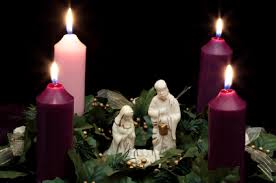
Advent wreathI received my “Little Blue Book1” in the mail yesterday. This is the book our parish office provides to the Church community to help us prepare for Advent and the Christmas Season. It consists of 43 days of readings, reflections and prayers beginning with the first day of Advent (30 November) and ending with the last day of the Christmas Season, the Feast of the Baptism of the Lord, (11 January).

When I found it in my mailbox I had to pause and remember what it was. Then, I recalled last year’s edition and how I came to thoroughly enjoy reading it each day. You see, last Advent/Christmas season was my first as a Catholic. I recall I was about half way through the 25 days of Advent before I began to comprehend that it was not just an event or a time-period in name only, but that there was indeed substance to it, a purpose.

The other thing I remember about last year was how difficult it was to take time to contemplate and reflect on that meaning and purpose. Last year found us not only caught up in the usual frantic activity of gift buying for family, but also preparing to drive from Ohio to Louisiana to spend Christmas with our daughter and, ultimately, her wedding three days after Christmas. Although I didn’t salvage much of Advent, we did enjoy a peaceful Christmas with her, and her wedding was one of those beautiful life events I will never forget.

So, when I received the book yesterday I was a little excited. I read the first two days of reflections and then had to put it down to do something else. I picked it up again today and read a couple more day’s worth before I put it down again because it felt like reading ahead was cheating – kind of like reading the last page or two of a novel to see how it ends instead of starting with the first page of chapter one.

A page from The Little Blue Book

A page from The Little Blue Book

But, that was just enough to pique my interest. As it sat there on the kitchen table this evening I glanced at it each time I walked by, my thoughts ruminating. At some point I asked myself, “Okay, since I missed half of Advent last year, what am I going to do differently this year so that I may be spiritually prepared for the celebration of the coming of Christ at His birth?” With that question, I sat down to brain storm and jot some notes.

First, I am happy I decided to go to Reconciliation this last Saturday. Afterwards, I felt totally forgiven and renewed. This seems like a necessary way to get started on the right track to experience this special event.

I will read from the Little Blue Book every day and spend, as it suggests, at least six minutes of quiet time with the Lord.

I will read the daily Scriptures and, in reflecting upon His Word, I will be more contemplative about His message.

I will open myself up to Him, being intentionally watchful for the way He presents Himself to me.

I will soak up the peace that He humbly brings to me and use it to displace the anxiety that is so common with today’s materialism.

I will pray more than I usually do each day, taking time to experience and give thanks for His love.

I will demonstrate my love for Him by being kinder and more charitable to those in need this season.

I will especially try to remember to call on Him to strengthen me in times of temptation, and to receive His light if my heart begins to darken.

And, I probably ought to sacrifice by fasting in some way. I certainly don’t think it will hurt me any!

As I write this, I seem to recall there being a second purpose behind Advent, that it’s not just a time to prepare for the coming of Christ and the celebration of His nativity, but also a time to prepare ourselves for His final coming. And, as I look at my list, I hope my plans will suffice for this purpose, too.

Having made these commitments, I feel positive I will be successful in keeping them. Although we are traveling again this Christmas – to Seattle to visit our new granddaughter, and to Kansas City for the birth of our second grandchild over New Year’s – the cost of holiday airfare for three people will just about eliminate anything but minimal gifts and, thus, the need to get anxious about shopping for just the right stuff. Hallelujah!

This Advent, I hope to honor my commitment to give thanks for His gifts by particularly enjoying the special time I will have with my family and preparing myself as a gift to Him at the celebration of His birth.

How will you prepare this Advent for the coming of our Lord?

“Heavenly Father, thank You for the gift of Your love in the form of Your Son, Jesus Christ, whom You sent to lead us to You. Help us, O Lord, to prepare our hearts for His coming. We pray that He finds us eagerly awaiting Him in joyful prayer. Amen.”

1 Little Blue Book, ®2014 Diocese of Saginaw, Inc.

©2014 Reflections of a Lay Catholic. Reposting and sharing of material in its full and original content is permitted, provided that full and clear credit is given to the author(s) and Reflections of a Lay Catholic.
 

← Older posts
Newer posts →

Enter your email address to follow this blog and receive notifications of new posts by email.

Join 258 other subscribers
Follow Reflections of a Lay Catholic on WordPress.com

Recent Posts

  • Be Amazing!
  • Is Your Heart Filled with Joy?
  • Mystogogy – It’s Not Just for Neophytes
  • How Will You Live Eastertide?
  • My “Re-Birthday”

Categories

Top Posts & Pages

  • You Reap What You Sow
  • St. Anthony of Padua - Patron Saint for the Recovery of Lost and Stolen Items
  • The Anti-Beatitudes
  • Take Up Your Cross
  • A Special Prayer Request
  • Are You a Rich Man or Rich Soil?
  • Finding Rest in the Desert
  • God Answers Prayers of Thanksgiving
  • The Cardinal at My Window
  • The Parable of the Lost Son – Part One

Archives

  • June 2026
  • May 2026
  • April 2026
  • March 2026
  • February 2026
  • January 2026
  • September 2025
  • August 2025
  • July 2025
  • May 2025
  • April 2025
  • February 2025
  • January 2025
  • December 2024
  • November 2024
  • September 2024
  • July 2024
  • May 2024
  • April 2024
  • March 2024
  • February 2024
  • January 2024
  • December 2023
  • November 2023
  • October 2023
  • September 2023
  • August 2023
  • June 2023
  • May 2023
  • April 2023
  • March 2023
  • February 2023
  • January 2023
  • December 2022
  • November 2022
  • October 2022
  • September 2022
  • June 2022
  • May 2022
  • April 2022
  • March 2022
  • February 2022
  • January 2022
  • November 2021
  • July 2021
  • June 2021
  • May 2021
  • April 2021
  • March 2021
  • February 2021
  • January 2021
  • November 2020
  • October 2020
  • September 2020
  • August 2020
  • July 2020
  • May 2020
  • April 2020
  • March 2020
  • January 2020
  • December 2019
  • November 2019
  • September 2019
  • July 2019
  • June 2019
  • May 2019
  • April 2019
  • March 2019
  • January 2019
  • December 2018
  • November 2018
  • October 2018
  • September 2018
  • August 2018
  • July 2018
  • June 2018
  • May 2018
  • April 2018
  • March 2018
  • February 2018
  • January 2018
  • December 2017
  • September 2017
  • August 2017
  • July 2017
  • June 2017
  • May 2017
  • April 2017
  • March 2017
  • February 2017
  • December 2016
  • November 2016
  • October 2016
  • September 2016
  • August 2016
  • July 2016
  • April 2016
  • March 2016
  • January 2016
  • December 2015
  • November 2015
  • September 2015
  • August 2015
  • July 2015
  • June 2015
  • May 2015
  • April 2015
  • March 2015
  • February 2015
  • January 2015
  • December 2014
  • November 2014
  • October 2014
  • September 2014
  • August 2014
  • July 2014
  • June 2014
  • May 2014
  • April 2014
  • March 2014
  • February 2014
  • January 2014
  • December 2013
  • November 2013
  • October 2013
  • September 2013
  • August 2013
  • July 2013
  • June 2013
  • May 2013
  • April 2013
  • March 2013
  • February 2013

Meta

  • Create account
  • Log in
  • Entries feed
  • Comments feed
  • WordPress.com

©2013 – 2026 Reflections of a Lay Catholic. Reposting and sharing of material in its full and original content is permitted, provided that full and clear credit is given to the author(s) and Reflections of a Lay Catholic.

Blog at WordPress.com.

  • Subscribe Subscribed
    • Reflections of a Lay Catholic
    • Join 258 other subscribers
    • Already have a WordPress.com account? Log in now.
    • Reflections of a Lay Catholic
    • Subscribe Subscribed
    • Sign up
    • Log in
    • Report this content
    • View site in Reader
    • Manage subscriptions
    • Collapse this bar

Loading Comments...