
• About
  • Books I’m Reading
  • Links

Reflections of a Lay Catholic

Reflections of a Lay Catholic

Tag Archives: Reconciliation

I AM

10 Thursday Apr 2025

Posted by Jerry Robinson in Bible Reflections

≈ Leave a comment

Tags

Abraham, Accompanyment, Eucharist, Friendship, I AM, Jesus, John 8:51-59, Meditation, Prayer, Present moment, Reconciliation, Sacraments

From 1968 to 1971 I spent my junior high and first year of high school in English grammar schools in the U.K.  My typical weekly class schedule was a far cry from what I’d received in American grade schools.  It included:  math, biology, chemistry, physics (not just one but all three), history, geography (not social studies), English, and one or more foreign languages.  I took French all three years, plus German as an 8th grader, and Latin in the 9th grade.  Unfortunately, none of it stuck with me.  One thing I do remember clearly, though, is conjugating verbs – first, second, and third person singular and plural, in past, present and future tenses.  In any language, we always began with the verb “To Be”, i.e., “I am” (first person singular present tense); “You were” (second person singular/plural past tense); and “They will” (third person plural future tense).  

I recalled this today while meditating on today’s Gospel from John 8:51-59, in which Jesus had an altercation with a group of Jews over the identity of their fathers:  God as the Father of Jesus, and Abraham as the father of the Jews.  Jesus states, “Amen, amen, I say to you, before Abraham came to be, I AM.”, effectively claiming that He was equal to God, (see Ex 3:14-15).  Because this was blasphemous to the Jews, they attempted to stone Him to death.

“I AM” – the first person singular present tense of the verb “To Be”.  Jesus speaks about Himself.  If we were talking to Jesus, we would say, “YOU ARE”.  If we were talking about Jesus to someone else, we would say, “HE IS”.  Jesus doesn’t say, “I WAS”, or “I WILL BE”, in the past or future tenses, and we can’t say about Him, “HE WAS”, or, “HE WILL BE”.  Jesus is simply, “I AM” day after day, moment after moment, with every tick of the second hand.  HE IS now, and HE IS again in the next moment.

We can’t think that Jesus was with us once, or that He will be with us one day to come.  No, He is with us only NOW, at this present moment, and every present moment to come. He is there with us in every present moment regardless if the circumstances of that moment are to our liking or not.

Don’t we often forget this, especially when times are tough?  When remembering events from the past that caused you grief, don’t you sometimes wonder, “Why was He not there when I needed Him?”  But, we forget that HE IS there, and if we had remembered this, we would have found comfort in His presence.  When we unite our crosses with His cross, He helps us carry ours.

Or, consider some dream you have of the future and how you will pat yourself on the back for thinking, “Wow, look what I accomplished!”  We forget that HE IS with us then, too, and that it is only through His grace that we will find that joy and satisfaction we now imagine.  

Whether it’s in good times or bad, when we lose the feeling of closeness with Jesus, we open a doorway allowing the Enemy to lead us down the wrong path.

How do we keep in mind that Jesus is with us at every moment, ready to answer our call?  The first and best way is through prayer.  Developing a habit of daily prayer keeps Him close to us. Prayers of praise, thanksgiving, and asking for His intercession are all ways to acknowledge His presence.  More effective yet is meditative prayer, when we take time to sit in silence and solitude, lovingly conversing with Him, telling Him what’s on our minds and hearts, and listening for His loving reassurance.  In this way, we readily remember all the times we’ve felt His presence, and reinforce our trust in Him in the present moment.  

Reading scripture, especially the Gospels, before entering into prayerful meditation is an excellent way to relate to Jesus and His love for us.  During this time of closeness, we receive the graces and mercy we need to persevere through our anxieties.  And when we act on these promptings of grace by adopting a resolution to change or accept our situation, we again grow in trust with Him.

When we receive the Sacraments of the Eucharist and Reconciliation, we immediately feel His presence. The Eucharist gives us supernatural strength to combat sin in our lives.  But then, when we fall and regret our actions, we can turn back to Him in the Sacrament of Reconciliation, be restored and experience His merciful love.  

Remembering that our Lord works in us through our interpersonal relationships helps us feel His presence, also.  A network of faithful friends accompanying each other provides a source of encouragement and support when times get tough.  It can keep us grounded, reminding us to be grateful to God.

“Dear Jesus, I know deep in my heart that You are always by my side.  My faith can get clouded when the world challenges me, and even when everything is going my way.  Help me, Lord, to remember You, to meet You each and every day through prayer and frequent reception of the Sacraments.  I love You, Jesus, and I know You love me.  Amen.” 

(I AM was first published on the blog Reflections of a Lay Catholic)

©2013-2025 Reflections of a Lay Catholic. Reposting and sharing of material in its full and original content is permitted, provided that full and clear credit is given to the author(s) and Reflections of a Lay Catholic.

Heart Emoji Colors for Catholics

26 Monday Jun 2023

Posted by Jerry Robinson in Love

≈ 4 Comments

Tags

Agape, Emojis, Eros, Friendship, Heart Emojis, Joy, Love, Philia, Reconciliation, Sorrow, Storge

A good friend and I often text each other about parish functions and she occasionally includes a colored heart emoji within her text.  A couple months ago she responded to a text of mine and it included a blue heart emoji.  I couldn’t remember ever getting any message with anything but a red heart emoji so I wondered, “why blue?”  I did an internet search on what the different colored emojis mean and, whoa!, I wasn’t prepared for what I found.

The first site I went to indicated that a blue heart alluded to a desire for BDSM (bondage, discipline, sadism, masochism).  I won’t even mention what the other colors signified. Then I realized I was looking at a site devoted strictly to sexual connotations.  (Don’t get any ideas, we are both happily married to our own spouses!)  Continuing on to two other sites, I read where blue indicates trust, confidence and loyalty. Phew, that sounded much better!

In perusing the various sites I found that each color has a general, but not universal, loosely accepted meaning.  For example: Green might mean jealousy; Purple, sensitivity; Yellow, happiness; and, of course, Red universally means true love; but there are no consistently recognized conventions for each color.  

Well if that’s the case, I thought, why can’t I devise an emoji color scheme for Catholics?  It might catch on or at least keep my good friend out of trouble.

The heart symbol is synonymous with a feeling of love for something.  In our faith, we know that love means more than just a feeling, and love takes a different form depending on the object of our love.  To begin, we can fall back on the four types of love expressed by the Greeks:  Eros, or Romantic love; Storge, or Familial love; Philia, or Friendship; and Agape, Unselfish love for mankind (enemies included) because they are simply children of God. 

Let’s start with Eros, romantic, passionate love. No question about it, it has to be red.
The love we have for our family ought to be green. It’s fresh and fun and is always growing.
I like what others say about blue – a friend is loyal, someone in whom you have confidence, someone you can trust.
Yellow should be for Agape love – warm and caring for our fellow humans, and a love that desires the other’s good.
Orange makes me think of autumn leaves, pumpkins, and Thanksgiving. This heart should be used to express love and gratitude to someone for the gifts they bring, especially to show your gratitude for how God has worked in your life.
Purple is the color of the priest’s vestments worn during reconciliation and so this heart has to be used to express forgiveness from one person to another.
In Catholic tradition, the fourth Sunday of Lent is called Laetare Sunday, or Joyful Sunday, and rose colored vestments are worn. Thus, the pink, or rose, colored heart ought to be used to express joy.
And to wrap things up, the black heart needs to be used to express sorrow for another’s loss.

What do you think?  We need some morality and consistency among Christians when using emojis.  We can’t just attach any color emoji to a text or social media post without making it mean something.  And, when the uninformed (the rest of the world) questions why you used a color that they think means something different, you can correct them and even use it as an opportunity to evangelize!

Share this with everyone you know.  Let’s get the word out and take back the internet!  Can I get an “Amen”?

(Heart Emoji Colors for Catholics was first published on the blog Reflections of a Lay Catholic)

©2013-2023 Reflections of a Lay Catholic. Reposting and sharing of material in its full and original content is permitted, provided that full and clear credit is given to the author(s) and Reflections of a Lay Catholic.

Become an Apostle of Reconciliation

28 Tuesday Mar 2023

Posted by Jerry Robinson in Reconciliation

≈ Leave a comment

Tags

Confession, Forgiven, John 8:1-11, Jonah, Penance, Reconciliation, Sacrament of Reconciliation, The Jonah Plan

It is Lent and, as such, there is a special call for repentance prior to Easter.  We want our souls to be in a state of grace prior to celebrating the Lord’s passion.  Most parishes offer a communal penance service a week or two before Holy Week for everyone who seeks to be cleansed of their mortal and venial sins through the Sacrament of Reconciliation.

Our parish’s penance service was last week.  Our pastor arranged for six priests to visit and join him in hearing confessions.  They spaced themselves out around the perimeter of the sanctuary for privacy’s sake.  I decided which priest with whom I wanted to air out my dirty laundry and took my place in that line.  As I looked around the church at the other lines and the folks still in the pews, I counted forty-nine souls.  Some parents and children were there together so there may have been thirty families represented overall.  Our parish has nearly 1,300 members.  Where were they?

My first reaction was sorrow for our pastor who was leading his first Lenten penance service in his new parish.  I felt sure that he must be experiencing some embarrassment in front of his brother priests for the lack of attendance.  And, he had to be thinking about the work ahead for him.

Then, I wondered why did people not come?  It had been advertised in our bulletin all during Lent, flyers were posted, and it was announced at masses.  Where was our faith community?  Some probably forgot.  Some may have recently been to confession.  Some probably planned to go to regularly scheduled Reconciliation on the following Saturday. 

It’s possible that some folks are without sin in their lives and didn’t need to go.  It’s possible.  But, not probable.

Being careful not to judge individuals, I concluded that for many parishioners it just wasn’t important.  The lack of importance may be a result of lukewarmness, a lack of catechesis, of having a minimal, if any, relationship with Jesus, or simply that other things were more important.  My worst fear was that people didn’t show up because they do not believe that the true Body, Blood, Soul and Divinity of Christ is contained in the Holy Eucharist, and, therefore, saw no reason to be reconciled and receive the Lord’s mercy before receiving communion.

I had been thinking about this since that night. Then, after meditating on yesterday’s Gospel, I decided I needed to say something.  Thus, with no intention of passing judgment on anyone in particular in our parish who skipped this beautiful opportunity to receive the mercy of God, or on anyone around the world who is reading this, I encourage you to go back and reflect on yesterday’s Gospel, John 8:1-11, the story of the woman caught in adultery.

In this passage, Jesus gives a shining example of his loving mercy.  The adulterous woman was afraid of the consequences prescribed by the Law of Moses – death by stoning.  Jesus, in His mercy, turned back the anger of the Pharisees when he brought to light their own sins by suggesting that whoever among them was “without sin be the first to throw a stone at her.”  Jesus then forgave the woman’s sins and told her to go and sin no more.  Do you think she was grateful?  You bet!  Do you think she worked on becoming more virtuous?  I suspect she did!  When we fail to go before the priest, confess our sins, and let Jesus forgive us, we are facing certain spiritual death.  We need His mercy, and when we receive it we should be as relieved and full of joy as that woman was.  We are given a new life and an opportunity to begin again.

But, this post is not just for those Catholics who don’t take this amazing Sacrament seriously.  No, it’s also for those who do.  You know how loved you feel when Our Lord absolves you of your sins, when His Grace has been restored within you.  It should make you run to tell others of Christ’s love, so that they will want to experience it, too.  We are called to practice the virtue of Charity.  How uncharitable would it be to not let a friend or family member know of this wonderful opportunity for salvation through reconciliation?  How much more can we love our neighbors than to bring them to this amazing “car wash” where the dirt and grime is power washed from their souls?  

A good friend of mine has chosen as her personal apostolate this very charity for others.  Paula has developed a website called The Jonah Plan.  Her hope is to establish a community committed to regularly attending the Sacrament of Reconciliation, praying for those who do not recognize its value, and learning more about the Sacrament so that they can teach others about it.  There is power in numbers, and Paula’s hope is that by joining with other people committed to devoting one day a month to pray that family, friends, and fellow parishioners return to this Sacrament and experience Christ’s love and mercy, the Church will be renewed.  Please check out her website at the link above. 

Won’t you become an Apostle of Reconciliation?

“Loving Jesus, thank You for Your mercy and absolution when I come before You and confess my sins.  Your love restores and invigorates my soul.  You give me new life and an opportunity to begin again.  Thank You!  Amen!”

(Become an Apostle of Reconciliation was first published on the blog Reflections of a Lay Catholic)

©2013-2023 Reflections of a Lay Catholic. Reposting and sharing of material in its full and original content is permitted, provided that full and clear credit is given to the author(s) and Reflections of a Lay Catholic.

We Have Entered Into Passion-tide

27 Monday Mar 2023

Posted by Jerry Robinson in Lent

≈ 1 Comment

Tags

Conversion, Interior Freedom, John 11:1-45, John 8:1-11, Lent, Reconciliation

I have the great pleasure and honor to post a reflection from a dear friend, Marian Rose Varisco, from Bryan, Texas.  Marian Rose and I have become close friends over the last six years in our association with the Catholic Spiritual Mentorship Program.  Marian Rose’s reflection exemplifies her deep interior life based on meditative prayer, listening to the Word of God in Scripture, and resolving daily to grow in virtue.  She offers this very personal reflection in hopes that it may help other souls desire and seek interior freedom.  If it appeals to you, I know she would appreciate hearing from you in a comment.  Thank you and God bless!

We Have Entered Into Passion-tide, by Marian Rose Varisco

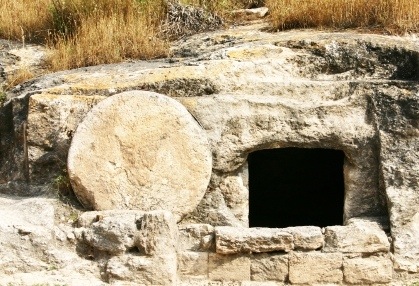
In yesterday’s Gospel, John 11:1-45,  Jesus said to roll away the stone from Lazarus’ tomb.  In today’s Gospel, John 8:1-11, we see the embarrassed Pharisees backing down from casting the stones they intended to use to kill the adulterous woman.  What is Jesus trying to tell me through these stones?

I believe He desires to show me areas of my heart which are broken and wounded.  I believe the stones represent areas where I am lacking in self-knowledge, areas which only the Holy Spirit can reveal to me.

Am I willing to sit, like the adulterous woman, in the dirt with Jesus, in my brokenness and hear Him say to me, “Go and sin no more”?  Where am I casting stones, like the Pharisees, in my thoughts, words and actions?  Am I willing to drop the “stones” I can so easily cast?  Jesus is inviting the adulterous woman, the Pharisees, and each one of us, to accept His invitation for real conversion!

Where am I acting out of my wounds, becoming tied hand and foot like Lazarus, placing a stone over my heart, and living in a tomb?  Am I willing to allow myself to hear Jesus weeping at the truth that parts of my heart are behind a stone?  Do I hear Jesus say to me, “Come out!”, knowing His desire is for me to have a life of interior freedom, not a life where I am bound in burial clothes?

These last two weeks of Lent are an opportunity to prepare our hearts more fully to be in His Presence.  Today I read in Finding Christ in the World, an Ignatius Retreat, that when Jesus entered into the Father’s Presence He had a sinless self-concentration.  The sentence concluded with the words, “…and you do not”.  Those words really pierced!

“Jesus, I ask you to stir Your Holy Spirit within me so that I may easily drop my stones and allow You to roll away any stone covering my heart.  Freed from these stones, through the Grace received in the Sacrament of Reconciliation, may I be truly present to Your Presence with a sinless self-concentration.  Amen.”

(We Have Entered Into Passion-tide was first published on the blog Reflections of a Lay Catholic)

©2013-2023 Reflections of a Lay Catholic. Reposting and sharing of material in its full and original content is permitted, provided that full and clear credit is given to the author(s) and Reflections of a Lay Catholic.

Reconciliation and a Rock

06 Thursday Oct 2022

Posted by Jerry Robinson in Reconciliation

≈ 1 Comment

Tags

Christ Renews His Parish, Forgiveness, Iron Sharpens Iron, Mercy, Reconciliation, Welcome

Yesterday I posted a reflection from my good friend, Bob Magness, and I promised to post a second one from him today.  One of the witness topics on the WELCOME retreat is Reconciliation.  Following the witness, Bob invited all team members to visit one of the two priests on hand for the Sacrament of Reconciliation.  Once again, Bob’s way with words brings me much joy.

Reconciliation and a Rock

by Bob Magness

The Welcome team formation process culminates with the weekend retreat.  Here, members of the Giving Team give witness to this process.  The miracles that occur every day to every-day ordinary men.  One of those witnesses is about the miraculous power of adding our sins to the burden that is Christ’s Cross. 

Reconciliation and a Rock

There’s an old metal bucket full of rocks.
Take one. Look at it closely.
Hold it in your hand. Rub it with your fingers.

How old is that rock?  How long did it take to form?
Are those broken edges smooth and worn or rough and jagged? 
Maybe a fossil- the mineralized remnants of the past.

What if you had to carry that rock around…day after day…weeks to months…and months to years? 
That weight in your pocket…maybe it’s light enough that you only notice it occasionally…maybe it’s heavier.
Those edges – smooth or do they still cut?

Our sins mineralize and become like that rock – fossils reminding us of that broken past.
Thankfully, we can stake those rocks to the Cross, 
Christ takes those rocks, the weight, the sharp edges,
Healing those wounds.

Reconciled.

There’s an old metal bucket full of rocks,
Each a little different, 
But the same story. 

Let go of your rock.

It can be a powerful weekend.  It takes a willingness to listen, to be present.    The weekend provides a chance to make sure you’re still oriented – to find the proverbial North Star.  Perhaps one of the most rewarding parts of the weekend is the realization that on this ship you’re not rowing alone.   In the words of Chesterton, “We are in the same boat, and we are all seasick”.   Everybody has a story.  Everybody.   

I pray that other Team members understand the impact they had on the men brave enough to attend the weekend.  I pray they understand the impact they had on me.  Brothers in Christ… Iron sharpens Iron.

____________________________________

(Reconciliation and a Rock was first published on the blog Reflections of a Lay Catholic)

©2013-2022 Reflections of a Lay Catholic. Reposting and sharing of material in its full and original content is permitted, provided that full and clear credit is given to the author(s) and Reflections of a Lay Catholic.

Confession, Gethsemane, and the Cross

09 Sunday Jan 2022

Posted by Jerry Robinson in Redemptive Suffering

≈ 4 Comments

Tags

Confession, Garden of Gethsemane, Grace, Reconciliation, Redemptive Suffering, The Cross

Today was a good day to go to the Sacrament of Reconciliation.  There was nothing on my agenda that needed my time, nor was there any voice in the back of my head giving me false justification for why I shouldn’t go.  It had been about a month since my last visit to the confessional, plenty of time to rack up a few venial sins for which I wasn’t very proud.

“Father, let’s start with the vice of Sloth.  Maybe it’s the weather, or maybe just coming down from the Holiday, but it’s been hard to get off my rear end and do anything worthwhile.  I have a long list of stuff, some of it pretty important, but procrastination has set in and it’s only the feel-good stuff that’s getting done.

“Let’s move on to Gluttony.  Maybe it’s a side-effect of the Sloth, but I’m overdoing it in the Comfort department.  Instead of two cookies, four or five is better.  An intended fifteen minute power nap turns into an hour.  You know what I mean?  I can’t say my lifestyle has earned much sanctification lately, Father.

“And last, and probably the most important, has been my Pride and my lack of faith.  Oh, my prayer life has been great, but my trust in Him has been lacking.  There’s a couple people whom I love very much who are hurting and struggling emotionally right now.  I’m a guy, I want to fix them, but I know there’s not much I can do to help but love them the best I can, and I know I should trust God to answer my prayers to bring them peace, but He’s not working fast enough for me.”

After a few words of consolation, affirmation, and my act of contrition, Father gave me my absolution and my penance to spend some time in church in prayer for those about whom I am concerned.  I thought, “If you say so, Father, but I’ve already been doing a lot of that at home.”

Finding a pew on Mary’s side, I looked up to the altar, above the altar, actually, and the first thing I saw was a stained glass window of Jesus praying in the Garden of Gethsemane.  It’s a beautiful window and every time I look at it I can’t help but think of the emotional anguish Jesus was experiencing at that moment.  He knew what was in store when He said, “Not my will, Father, but let Your will be done.”  Uniting His will with the Father’s, He put His trust in God that all would be well, and then got up and got on with the business at hand.

Jesus Praying in the Garden of Gethsemane (Not as beautiful as the one in our church but the best I could do)

My eyes dropped down a notch to that which was between the window and the altar – the Crucifix, that wooden cross upon which Jesus was nailed, and which culminated in the salvation of the world.  Looking up at Him, I knew He knew what I was going through.

It dawned on me that the Agony in the Garden was Jesus’ passive suffering and sacrifice.  It was what was handed to him as a loving human being.  But, His crucifixion was His active suffering and sacrifice, that which He chose to do for the sake of the world, including you and me.

Most protestants don’t believe in In Persona Christi, that Christ works mercifully through the priest to absolve sins and bring us closer to Him.  I thought how wrong they are because there seemed to be a heap of Grace, Mercy, and Divine Providence staring me right in the face.  Jesus was making it clear that my own emotional turmoil was my passive suffering, it goes with being alive and is a grace that comes from my ability to love.  I needed to offer it to Him with love and trust.

And, He was leaving no doubt that I needed to actively choose a sacrifice on behalf of the ones for whom my heart pours out.  God doesn’t ask for the impossible.  He asks for the possible but at the same time makes you stretch, makes you get over your inertia and get out of your comfort zones so that He can draw you closer to Him.  For me, that means pushing myself to grow in the virtues of Temperance and Diligence to offset my tendencies towards Gluttony and Sloth.  For the ones I love, that’s a sacrifice I can make.

In Persona Christi. Through the priest, the Holy Spirit could have given me the usual Our Father and three Hail Mary’s as a penance.  Today, he didn’t.  He just wanted me to sit before Him and pray, to open my heart to His Spirit and His Will, and let Him penetrate me with His Grace, and convince me that He’s got this. 

“Loving and gracious God, thank You for Your bountiful grace and mercy.  Thank You for putting in me a heart that is so full of love that it hurts.  Thank You for bolstering my faith each and every time I let my pride put more trust in me than I do in You.  Amen.”

(Confession, Gethsemane, and the Cross was first published on the blog Reflections of a Lay Catholic)

©2013-2022 Reflections of a Lay Catholic. Reposting and sharing of material in its full and original content is permitted, provided that full and clear credit is given to the author(s) and Reflections of a Lay Catholic.

Wanted: Saints in Heaven. Please Send Resume.

17 Tuesday Nov 2020

Posted by Jerry Robinson in Bible Reflections, Saints

≈ 2 Comments

Tags

1 Jn 4:10, Confession, Gratitude, Holiness, Hope, Interior Life, Lk 18:35-43, Lk 19:1-10, Love, Prayer, Ps 15:2-5, Reconciliation, Repentance, Rv 3:1-6, Rv 3:14-22, Saints, Zacchaeus

The Calling of Zacchaeus

This last spring I applied for a job which I thought would be interesting, would lead me closer to Christ, and was in-line with my passion for helping others grow closer to our Lord.  And, it offered full medical benefits at no cost to me!  However, there were two downsides to the opportunity:  first, that I would have to drive an hour each way to and from work (the cost of which would be offset by the savings on retiree medical insurance); and second, after being retired for three years I really didn’t want a full time job anyway.  

After waiting the obligatory two weeks, I received a response thanking me for my interest but advising that my engineering degree and 36 years of engineering related management experience made me exceedingly over-qualified for the position.  I felt neither rejected nor relieved at the response but, instead, looked at it as God saying that someone else needed the opportunity more than me.  I was happy to let His will be done.

I thought about this as I read today’s Scripture (Rv 3:1-6, 14-22; Ps 15:2-5; 1 Jn 4:10; and Lk 19:1-10 NAB).  I thought, “Every day I am adding one more experience, either good or bad, to my resume for the position of a Saint in heaven.  When the day comes and it gets reviewed, will I be qualified or under qualified? (Thankfully, there is no such thing as being over qualified although we humans may often think we are!).  How will my resume read?  Will it be an affirmation of the requirements mentioned in today’s scripture?:

“Has my faith been alive or dead (Rv 3:1)?  If it’s been alive, has it been on fire or has it been lukewarm at best (Rv 3:16)?

“Have I opened the door of my heart to the Holy Spirit and allowed Him to enter and form the interior life within me (Rv 3:20)?

“Do I hope for the victory and the right to sit next to Jesus on His throne (Rv 3:21)?

“Have I done what is right, and spoken the truth from the heart such that I can walk without blame (Ps 15:2)?

“Have I not harmed, defamed, or slandered a neighbor or friend (Ps 15:3)?

“Have I honored those who live a holy life, trying to live a holy life myself and steering away from the wickedness of the world in spite of the pressures to do otherwise (Ps 15:4)?

“Have I taken advantage of others financially and profited from it, or could I have been more generous in my charity (Ps 15:5)?

“Have I been grateful to God for His love and, out of love, sending me His Son for expiation of my sins (1 Jn 4:10)?

“Have I been grateful to God for all the love He has sent my way through my family and friends (1 Jn 4:11)?

“Have I lived in the present moment and been intentional about seeking Jesus through prayer (Lk 19:3-4)?

“Have I received Jesus with joy when He hears me, answers my prayers, and when I feel His presence (Lk 19:6)?

“Have I been grateful for all my possessions, especially all the graces the Lord has bestowed on me (Lk 19:8)?

“Have I confessed my sins when I know I’ve done wrong, and have I repented to do right (Lk 19:8)?”

Wow!  Those are some exacting job requirements!  And, I know it’s not all of them.  Maybe it’s a good thing I didn’t get that job after all because I think I need to spend my retirement creating some new and positive experiences and tweaking the final edition of my resume.  

The good news is that each of us already has an office in heaven with our name on the door just waiting for us to occupy it.  It is not beyond our reach to become qualified for the position.  The benefits will certainly make the drive worthwhile! 

How will your resume read?

“Loving Father, as the blind man in yesterday’s Gospel (Lk 18:35-43), I pray to be able to ‘see’ – that is to grow in faith so that I may love You more clearly and more dearly; for the grace to live by Your commandments; and to never lose Hope that I may one day sit with You on Your throne.  Amen.”

(Wanted:  Saints in Heaven.  Please Send Resume. was first published on the blog Reflections of a Lay Catholic)

©2013-2020 Reflections of a Lay Catholic. Reposting and sharing of material in its full and original content is permitted, provided that full and clear credit is given to the author(s) and Reflections of a Lay Catholic.

Reconciliation: A Grace-Filled Turning Back to God

04 Saturday Apr 2020

Posted by Jerry Robinson in Reconciliation

≈ 2 Comments

Tags

CCC 1441, CCC 1442, Confession, Examination of Conscience, Jn 20:19-23, Jn 4:28, Reconciliation, Sacrament of Reconciliation

Each day this week I’ve offered related posts about sin, Spiritual Atrophy that brings about heightened opportunities to sin during these stressful times of self-isolation, and ways to recognize the sins you’ve committed (or omitted): the “Checklist”, CPR, and Analytical methods of examining one’s conscience.

So, what is the next step? You’ve utilized one of these methods and identified particular actions or attitudes that have damaged your relationship with either God, other people, or both. You’ve analyzed the seriousness of your sins, determined if they are mortal or venial, and now you feel remorse, embarrassment, or, even worse, shame for having committed them. If you’ve made it this far and genuinely have a contrite heart, you’re good to go on to the next step. If you don’t feel a real sense of remorse, then you probably ought to go back to step one and start over again.

The next step for the repentant soul is to let God love you! This means accepting that God loves you even when you are wounded and stained. It means turning back to God and loving Him in return by telling Him that you’re sorry for choosing an inferior good over Him. And, it means asking for God’s mercy, His forgiveness, and to be cleansed of your sins. Asking is necessary, for as St. Augustine said, the Lord who created you without your permission, cannot save you without your permission. We take this step by going to the Sacrament of Reconciliation, confessing our sins, and receiving His mercy even though we don’t deserve it.

I have heard many and various reasons why people don’t want to go to confession: embarrassment, shame, fear of what God will think, fear of what the priest will think, etc. It’s important to remember that God is not scandalized by our sins – He already knows what they are! We may try to justify our sins in an attempt to lessen their severity, but God can’t be fooled. He wants humility and honesty and to see that our view matches up with His. God is like a father who is not scandalized when his teenaged new driver has his or her first fender bender.

Neither will the priest be scandalized. Every priest I’ve ever talked to about reconciliation has said they rejoice when a person confesses their sins. They see it as a win/win: a victory for the Lord that we have returned, and a victory for us that our sins have been erased. A common excuse many give for not going to confession is that the priest will be surprised with your sin. This time, you’re fooling yourself. There are very few sins he hasn’t heard. The devil is not that creative! Neither will the priest remember your sins. He hears so many there’s no way he can remember them all, and he doesn’t want to. Finally, the priest is bound by a sacred seal to never repeat anything that you mention in the confessional.

Another common excuse for not going to confession is that it’s easier to just talk to God and give Him your apology. The Protestants might think that works for them but it doesn’t work for us Catholics. Sorry. We go to confession because Jesus himself invented the Sacrament of Reconciliation, not the Apostles, not any one particular pope, not the Church in general, but Jesus. (Jn 20:19-23). Also, we are human, a combination of body and soul. We need to hear with our ears that we are forgiven and we hear Jesus forgive us through the priest just as we would have two thousand years ago if it was Jesus himself. (CCC 1441-1442)

Once you’ve moved past your fears and rationale for not going to confession and decided to show up at the confessional, it’s best to know how to make a good confession. First, one needs to be completely open and honest and be frank in saying their sins. There’s no need to explain or try to justify what you’ve done. If the priest thinks it’s necessary to know, he’ll ask. Perhaps even more importantly, one needs to truly repent and demonstrate a desire to not commit that sin again by reciting an act of contrition. Then, one needs to demonstrate a desire to change and be healed by carrying out the penance assigned by the priest, and give consideration to what will be done differently to avoid that sin in the future.

A good confession is rounded out by a prayer of thanksgiving and a feeling of love shared between God the Father and you, His beloved son or daughter. This reconciliation with God and the whole Church is truly a moving experience! God gives us His own life in the form of grace that restores and heals us. It gives us the strength to do good, resist evil, and begin again. And, it remits the eternal consequences of our sin (Hell).

Another way to show gratitude for the absolution of our sins is to encourage friends and family to visit this Spring of Living Water just as the Samaritan woman did when she invited the people of her town to meet Jesus. (Jn4:28) Is there any better act of charity than to help others who are stained with sin to be cleansed and reconciled to God?

I am late getting this posted so you will not be reading it until Saturday at least. Many parishes typically offer the Sacrament on Saturdays, and still do even with the pandemic, but follow the mandated social distancing guidelines. I pray that these posts this week will have encouraged you to examine your conscience; identify those particular areas where you’ve been less virtuous than you should; and, by better understanding the Sacrament, give you the fortitude to visit Jesus and receive the Living Water that He offers. Remember, He can’t fill your cup if it’s turned upside down.

I hope you have a truly faith-filled Holy Week in spite of not being able to participate in the celebration at your church. God bless you all!

(Reconciliation: A Grace-Filled Turning Back to God was first published on the blog Reflections of a Lay Catholic)

©2013-2020 Reflections of a Lay Catholic. Reposting and sharing of material in its full and original content is permitted, provided that full and clear credit is given to the author(s) and Reflections of a Lay Catholic.

How to Make a Thorough Examination of Conscience – Part 3: The Analytical Method

02 Thursday Apr 2020

Posted by Jerry Robinson in Examination of Conscience, Reconciliation

≈ 1 Comment

Tags

Examination of Conscience, Reconciliation, Spiritual Atrophy

This post presents the third of three methods for making a good and thorough examination of conscience. On Monday, I posted Spiritual Atrophy and the Need for an Examination of Conscience During Self-Isolation in which I emphasized the dangers of letting our spiritual lives decline during this difficult time of isolation; the associated risk of falling into sin more easily; and how a good examination of conscience can help turn us around.

On Tuesday, I posted How to Make a Thorough Examination of Conscience – Part 1: The “Checklist” Method. In it I discussed the types of sin, the general principles behind a good examination, and links to examples of questions to ask ourselves when making an examination.

And, yesterday I posted How to Make a Thorough Examination of Conscience – Part 2: The CPR Method. This method is less specific and more subjective than the “Checklist” method and begins by recalling the times God was present in your life during the day; looks at the events of the day and how you reacted to them; and finishes by making a resolution to improve.

Today, I am presenting the Analytical Method of examining one’s conscience. Like the CPR method, I am copying the following from Laudate, a very useful, comprehensive, and essential Catholic app. This method combines some of each of the previous two methods. It can be both objective with Yes/No questions, and subjective with open ended reflection.

The Analytical Method

A. Quiet your soul and enter into God’s presence, asking Him for light to know yourself and to know Him.

B. Review the major areas of God’s will in your life [e.g. roles and responsibilities], examining the level of your faithfulness to what God was asking of you. Trust that the Holy Spirit will draw your attention to what He wants you to reflect on. As you do this examination, keep asking yourself, “Why?”, so that you are sure to let God’s healing grace seep into the very roots of your selfish tendencies.You could arrange this examination by key relationships:

  1. You could arrange this examination by key relationships:
  • Relationship with God: prayer, obeying the Commandments;
  • Relationships with others (especially those closest to you): honesty, generosity, compassion, loyalty, purity, patience, etc.
  • Relationship with self: responsibility (work, school, home, money), laziness, healthy discipline, etc.

2. You could arrange this examination by the three “W’s”:

  • Way – How did I treat people? How did I go about my business? In a Christ-like way?
  • Words – Were my words worthy of Christ?
  • Works – Were my decisions and actions in harmony with my mission as a Christian?

C. Thank God for the good that, with His grace, you were able to accomplish; ask for (and accept!) His forgiveness for your shortcomings and sins.

D. Renew your commitment to follow him even more closely tomorrow (if you can identify a specific resolution to make your commitment even more concrete, all the better).

There are two aspects I like about this method. First, that it isn’t just a mental exercise for you. It involves entering into the presence of God through meditation and asking the Holy Spirit to show you your faults and failings, where they lie, and their root causes. Secondly, it focuses on relationships and roles: with God, others and yourself. And, like the CPR method, comparing your actions against God’s will for you enables you to make a better resolution to grow closer to Christ, which, again, is what it’s all about.

I will conclude this series tomorrow with some thoughts on what the next step is after a good and thorough examination of conscience, namely, attending the Sacrament of Reconciliation. Stay tuned!

Just as you are taking precautions to prevent exposure to the Coronavirus and subsequent ailment, I urge you to take necessary precautions and protect your spiritual health as well. God bless you all.

(How to Make a Thorough Examination of Conscience – Part 3: The Analytical Method was first published on the blog Reflections of a Lay Catholic)

©2013-2020 Reflections of a Lay Catholic. Reposting and sharing of material in its full and original content is permitted, provided that full and clear credit is given to the author(s) and Reflections of a Lay Catholic.

How to Make a Thorough Examination of Conscience – Part 2: The CPR Method

01 Wednesday Apr 2020

Posted by Jerry Robinson in Examination of Conscience, Reconciliation

≈ 2 Comments

Tags

Examination of Conscience, Reconciliation, Sin, Sins of Commission, Sins of Omission

On Monday I posted Spiritual Atrophy and the Need for an Examination of Conscience During Self-Isolation in which I emphasized the dangers of letting our spiritual lives decline and go flat since we cannot make it to Holy Communion. Unless a special effort is made we will experience a gradual decline that likely will lead to venial or mortal sin. Since the Ten Commandments are all about relationships with God and each other, any sin can damage those relationships. The mechanism we use to recognize our sins is called an Examination of Conscience.

In yesterday’s post, How to Make a Thorough Examination of Conscience – Part 1: The “Checklist” Method, I discussed the two types of sin: mortal and venial, and non-sins which we call imperfections, as well as general principles behind a good examination. And, I provided links to examples of questions, or “checklists”, that, when asked of ourselves and viewed from God’s perspective, will help identify our sins.

Because I was in a rush to finish the post I forgot to mention a couple things. First, the questions asked in this method are normally “Yes” or “No” questions. They are very specific and intended to pinpoint those actions for which you may not be too proud. They will not only expose your sins of “commission” (the things you did but shouldn’t have done), but also your sins of “omission” (the things you should have done but failed to do).

The second point I forgot to mention is that there are “checklists” designed for one’s particular state in life. Besides the general lists of questions for anyone, there are sets for children, young adults, singles and married people. An excellent place to find these is on the Laudate app which you can get for your mobile phone. It is an essential tool for anyone interested in consistently practicing and growing in their faith. A very good list for married people can also be found at Beauty So Ancient: A Wonderful Examination of Conscience for Married Couples.

By utilizing one of these lists of questions on a regular basis, a person can nearly memorize those areas that tend to come to the surface. It’s important to not skim over the small stuff. The small stuff can become big stuff.

Today, I want to introduce a second method called the CPR Method of examining one’s conscience. I discovered this method from the Laudate app. Unlike the “checklist” method, this one doesn’t ask specific “Yes” or “No” questions. Rather, it asks you to look at your day subjectively rather than objectively. (The following is copied directly from Laudate):

C = Claim Your Blessings

Reflect on the good things that happened to you today, and explicitly recognize God’s hand in them. He has been loving you every minute of the day, thinking about you, drawing close to you. Thank Him for the little blessings and the big ones. See His gaze of love directed toward you. Ask Him to help guide these few minutes of prayer.

P = Pinpoint Victories and Losses

Taking a kind of “helicopter” view of the activities of the day, examine how you lived them. Where were you selfish in your decisions, attitudes, words, and actions? Where were you virtuous and generous? Also, examine how you responded to the Holy Spirit’s inspirations throughout the day. As you do this, ask for (and accept!) God’s forgiveness for the times you gave in to selfishness or temptation, and thank Him for the graces He gave you to do good and to be faithful to His will.

R = Renew Your Loving Commitment to Christ

Finish by renewing your faith in God and your desire to know Jesus more clearly, to love Jesus more dearly, and to follow Jesus more nearly every single day. If possible, make a specific resolution (proposal of amendment) regarding something you will have to do tomorrow – something you can do to show Christ your love in a concrete way. End with an Our Father, a Hail Mary, and the sign of the cross, or another favorite prayer.

This method is best practiced after one has spent some time using the previous method and getting used to their various faults. I particularly like this method because to begin requires placing yourself in the presence of God, recognizing His love for you, and returning your love back to Him. And, making a resolution in the third step is a sign to God that you really do want to make the effort to grow in virtue and closer to Him. As I mentioned yesterday, this is really what it’s all about – amending your ways and refraining from near occasions of sin in the future.

Tomorrow I will introduce you to the third method of examining your conscience: The Analytical Method.

God bless you all. Be safe and stay healthy. I pray you use some of your newly found free time growing close to God.

(How to Make a Thorough Examination of Conscience – Part 2: The CPR Method was first published on the blog Reflections of a Lay Catholic)

©2013-2020 Reflections of a Lay Catholic. Reposting and sharing of material in its full and original content is permitted, provided that full and clear credit is given to the author(s) and Reflections of a Lay Catholic.
← Older posts

Enter your email address to follow this blog and receive notifications of new posts by email.

Join 264 other subscribers
Follow Reflections of a Lay Catholic on WordPress.com

Recent Posts

  • Are You Ready to Proclaim the Gospel?
  • A Prayer for Continued Progress
  • Be Like the Thessalonians
  • Be Magnanimous Like Mary
  • Are You an Average Catholic?

Categories

Top Posts & Pages

  • The Anti-Beatitudes
  • Saints Joachim and Anne: The Perfect Grandparents
  • A Monday Morning Blessing
  • As Iron Sharpens Iron
  • The Greatest Commandments & St. Wulfram of Sens
  • The Big Stuff
  • The Cry Room Blues
  • The Choosing
  • Groundhog Day
  • Virtue: A Casualty of a Secular Culture

Archives

  • September 2025
  • August 2025
  • July 2025
  • May 2025
  • April 2025
  • February 2025
  • January 2025
  • December 2024
  • November 2024
  • September 2024
  • July 2024
  • May 2024
  • April 2024
  • March 2024
  • February 2024
  • January 2024
  • December 2023
  • November 2023
  • October 2023
  • September 2023
  • August 2023
  • June 2023
  • May 2023
  • April 2023
  • March 2023
  • February 2023
  • January 2023
  • December 2022
  • November 2022
  • October 2022
  • September 2022
  • June 2022
  • May 2022
  • April 2022
  • March 2022
  • February 2022
  • January 2022
  • November 2021
  • July 2021
  • June 2021
  • May 2021
  • April 2021
  • March 2021
  • February 2021
  • January 2021
  • November 2020
  • October 2020
  • September 2020
  • August 2020
  • July 2020
  • May 2020
  • April 2020
  • March 2020
  • January 2020
  • December 2019
  • November 2019
  • September 2019
  • July 2019
  • June 2019
  • May 2019
  • April 2019
  • March 2019
  • January 2019
  • December 2018
  • November 2018
  • October 2018
  • September 2018
  • August 2018
  • July 2018
  • June 2018
  • May 2018
  • April 2018
  • March 2018
  • February 2018
  • January 2018
  • December 2017
  • September 2017
  • August 2017
  • July 2017
  • June 2017
  • May 2017
  • April 2017
  • March 2017
  • February 2017
  • December 2016
  • November 2016
  • October 2016
  • September 2016
  • August 2016
  • July 2016
  • April 2016
  • March 2016
  • January 2016
  • December 2015
  • November 2015
  • September 2015
  • August 2015
  • July 2015
  • June 2015
  • May 2015
  • April 2015
  • March 2015
  • February 2015
  • January 2015
  • December 2014
  • November 2014
  • October 2014
  • September 2014
  • August 2014
  • July 2014
  • June 2014
  • May 2014
  • April 2014
  • March 2014
  • February 2014
  • January 2014
  • December 2013
  • November 2013
  • October 2013
  • September 2013
  • August 2013
  • July 2013
  • June 2013
  • May 2013
  • April 2013
  • March 2013
  • February 2013

Meta

  • Create account
  • Log in
  • Entries feed
  • Comments feed
  • WordPress.com

©2013 – 2024 Reflections of a Lay Catholic. Reposting and sharing of material in its full and original content is permitted, provided that full and clear credit is given to the author(s) and Reflections of a Lay Catholic.

Blog at WordPress.com.

  • Subscribe Subscribed
    • Reflections of a Lay Catholic
    • Join 264 other subscribers
    • Already have a WordPress.com account? Log in now.
    • Reflections of a Lay Catholic
    • Subscribe Subscribed
    • Sign up
    • Log in
    • Report this content
    • View site in Reader
    • Manage subscriptions
    • Collapse this bar
 

Loading Comments...