• About
  • Books I’m Reading
  • Links

Reflections of a Lay Catholic

Reflections of a Lay Catholic

Category Archives: Evangelization

Mystogogy – It’s Not Just for Neophytes

14 Tuesday Apr 2026

Posted by Jerry Robinson in Evangelization

≈ 2 Comments

Tags

Accompaniment, Eastertide, Evangelization, Faith, Friendship, Jesus, Mystogogy, Neophyte, OCIA, Order of Christian Initiation of Adults, Pentecost, Sacraments

At the Great Easter Vigil, we welcomed home, through Baptism and Full Communion, forty-four men, women and children, a record number, into our faith and into our parish family.  Easter marked the culmination of twenty-eight weeks of OCIA formation for these new Catholics.  Their initiation into the Church was not a graduation, but a commencement, a new beginning.  Now, during the seven weeks between Easter and Pentecost, the neophytes (the moniker given to those coming into the Church during their first year) continue their spiritual growth in the period of “Mystogogy”.  It is a special period when the neophytes begin living and experiencing the Sacraments, and dive deeper into living their faith instead of just learning “about” their faith.  It can be a precarious, “make-it-or-break-it” period, marked by joyful continuing transformation, or being left to flounder in confusion.  
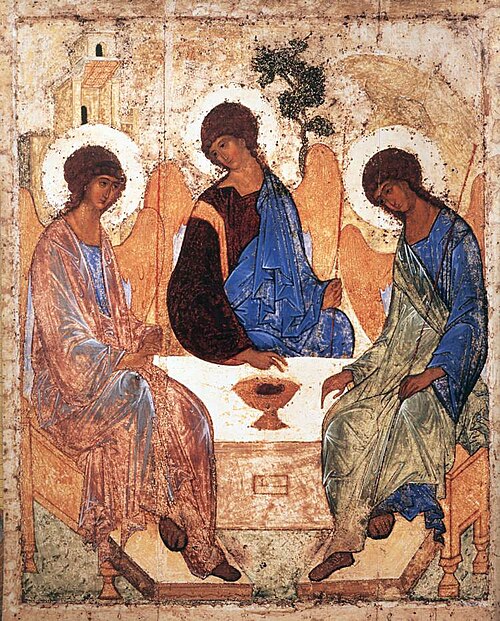
Icon of the Holy Trinity, Andrej Rublev, circa 1411,

What is often overlooked is that Eastertide isn’t just a time for transformation for neophytes.  No matter how long we’ve been Catholic, nor how devout we are, each of us is still on our individual, spiritual, lifelong journey of ongoing conversion of growing closer to, and following in the ways of, our Lord.  Mystogogy is not just for neophytes, it is for each of us.

How Will You Live Eastertide, this period of celebration between Easter Sunday and Pentecost Sunday?What will you do over the next six weeks?  My hope is that you will give thanks for the blessings God has bestowed upon you, especially the gift of salvation through Jesus Christ; take time to pray and grow closer to Jesus; and that you will intentionally seek ways to live the Christ life through charity and love of your neighbor.  I’d like to suggest a desperately needed and mutually beneficial way to love your neighbor and live that Christ life -accompany a neophyte!

Across our great country, the Church has experienced a record number of initiations this year.  Your parish probably had a few, as well.  If so, the neophytes need you! They need to be shown how to live their faith interiorly through prayer and fervent participation in the Sacraments, especially Mass and Reconciliation.  They need to see how their faith can be lived exteriorly by serving within and outside of our Catholic community.  They need friendship, people who will nurture them and show them the way.  They need reinforcement that they made the right choice.  They need personal invitations to become engaged in the life of the parish, not just given an overall directive from their catechists to “get involved”.  Without your accompaniment, these neophytes are left to believe that they just “graduated” and may get confused about  what exactly they should do next.  Rather, they’ve just begun a new journey into a much more beautiful and joyful life.  Won’t you seek them out and help them find that joy and beauty they need to help sustain their new-found faith through your friendship?

“My loving and all generous Lord, thank You for sending the Holy Spirit into our community and inspiring so many to desire to become brothers and sisters in Communion with You!  Thank You for allowing me to be a part of their transformation as an OCIA catechist.  Now, Lord, please place it on the hearts of their new communities to accompany them, and to help them continue to find and experience Your love in all aspects of their lives.  Amen.”

(Mystogogy – It’s Not Just for Neophytes was first published on the blog Reflections of a Lay Catholic)

©2013-2026 Reflections of a Lay Catholic. Reposting and sharing of material in its full and original content is permitted, provided that full and clear credit is given to the author and Reflections of a Lay Catholic.
How Will You Live Eastertide?

08 Wednesday Apr 2026

Posted by Jerry Robinson in Evangelization

≈ Leave a comment

Tags

Acts of the Apostles, Easter, Eastertide, Evangelization, Jesus, Jn 20:11-18, Mary Magdalene, Mt 28:8-15, OCIA, Pentecost, Ps 105:1-4, Resurrection

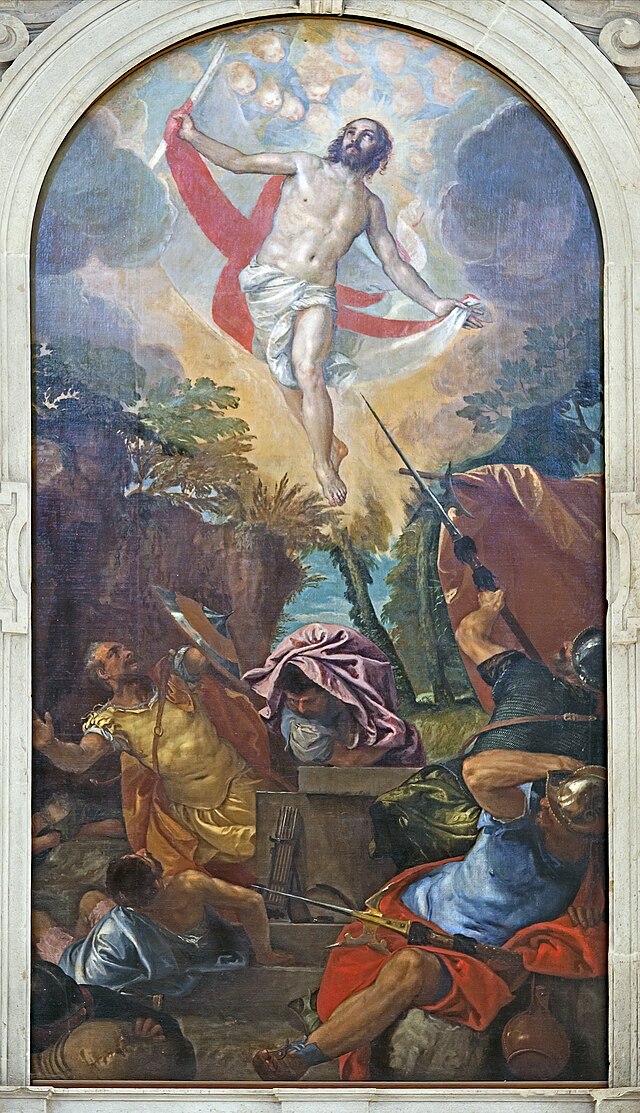
The Resurrection of Christ, Paolo Veronese, circa 1560 (Wikimedia commons)

Happy Eastertide!  I don’t know about you, but for me Holy Week’s intense focus on Christ’s passion can be dark, dreary, and depressing. Then, suddenly, Easter arrives with a burst of pure sunshine filling our hearts with joy, peace and hope!  Holy Week necessitates a sense of sorrow and regret as we fast, pray, and repent.  But, from now until Pentecost, we celebrate Eastertide.  What will that mean for you?  How will you live this exciting period?

In the gospels for Easter Monday (Mt 28:8-15) and Tuesday (Jn 20:11-18), we read about Mary Magdalene’s encounter with Jesus on the day after His crucifixion, and subsequent relating it to the other disciples.  I was imagining this scene where she tells the disciples about her encounter.  I doubt her conversation went like, “Mornin’, guys.  Any fresh coffee?  Oh, by the way, I got up early and went to Jesus’ tomb but He wasn’t there, and as I strolled back here this morning I met an angel-like guy all dressed in white who told me to stop crying.  And then I met this other dude who said he was Jesus and I should stop holding on to him.  What do you make of it?”

No!  We’re told she “went away quickly” / “ran” to tell the disciples about meeting Jesus.  She had seen Jesus Who was no longer dead and in His tomb and couldn’t run fast enough to tell the gathered together disciples all about her encounter.  Imagine the excitement in her voice!  She was gasping for breath and probably couldn’t find the words to make an intelligible sentence.  Yet, nothing could keep her from proclaiming what she had witnessed.

What will you do over these next seven weeks?  Will life just get back to normal?  Or will you live Eastertide like Mary and the Apostles, about whom we read in the Acts of the Apostles, and who earnestly evangelized after Pentecost?  Will you live the Psalm from Easter Wednesday (Ps105:1-4), “Give thanks to the Lord, invoke His name; make known among the peoples his deeds!  Sing praise to Him…proclaim all His wondrous deeds!” 

At every Mass, we recite, “We proclaim Your death, O Lord, and profess Your Resurrection, until You come again.”  Will that sentiment remain within the confines of the church building, or will you live it outside of those walls?  Will your disposition be joyful or will it revert to complaining about the exigencies of life?

Now is the time to consider how well you evangelize.  Your parish may have just initiated at Easter a whole new cohort of Catholics through OCIA, and is preparing to begin the process with a new class.  Who will you invite?  There are people out there just waiting to have the gospel proclaimed to them, people who are searching for a new life in Christ.  Won’t you show them the way?

“My dear Lord Jesus, thank You for Your sacrifice for the redemption of my soul!  Your Passion brought tears but your Resurrection brings immeasurable joy.  I pray for the grace to courageously ‘proclaim Your death and profess Your Resurrection’ so that others may know of Your great love.  Amen.”

(How Will You Live Eastertide? was first published on the blog Reflections of a Lay Catholic)

©2013-2026 Reflections of a Lay Catholic. Reposting and sharing of material in its full and original content is permitted, provided that full and clear credit is given to the author(s) and Reflections of a Lay Catholic.

Jesus and the Woman at the Well

08 Sunday Mar 2026

Posted by Jerry Robinson in Evangelization

≈ 2 Comments

Tags

Discipleship, Evangelization, Faith, Friendship, Grace, Jesus, Jn 4:16, Jn 4:4, Jn 4:5-42, Living Water, Love, Mercy, Missionary Discipleship, OCIA, Order of Christian Initiation of Adults, Spiritual Thirst

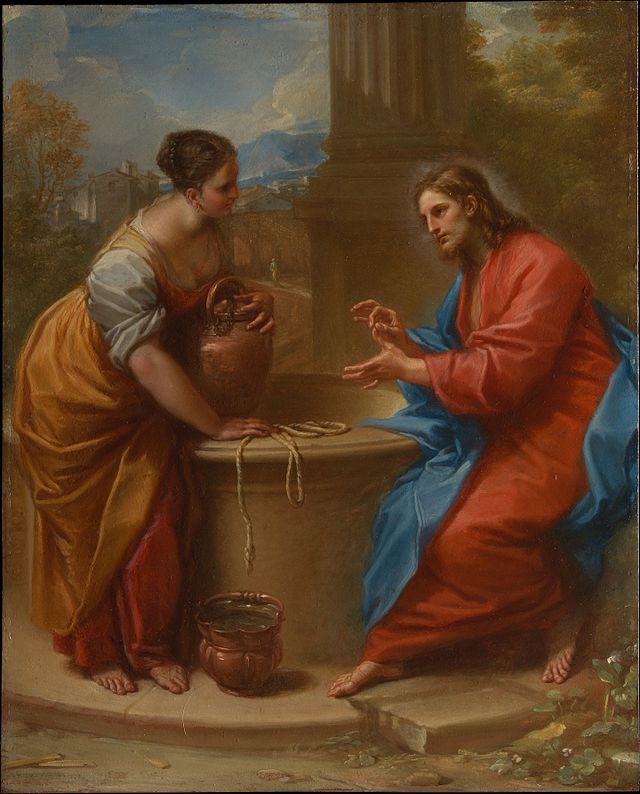
Christ and the Woman of Samaria, by Benedetto Luti, via Wikimedia Commons

It is Sunday, March 8th, the third Sunday of Lent and, for us catechists and Elect in the Order of Christian Initiation of Adults (OCIA) process, it marks the First Scrutiny leading up to the Elect’s baptism at the Great Easter Vigil.  The Scrutinies (over three consecutive Sundays) consist of Scripture passages which help us to look inside and see the truth about ourselves, our predominant faults and habitual sins; and the divine love and mercy that God bestows on us when we repent and learn to trust in Him. 

Today’s Gospel was Jn 4:5-42, Jesus’ meeting with the Samaritan woman at the well.  In this passage there are numerous messages that help us see our brokenness, our need for spiritual fulfillment, and our futile efforts for finding happiness outside of a relationship with our Lord.  But, thankfully, it shows us the joy we will find when we accept the “Living Water” that Christ offers to quench our spiritual thirst, replacing all the other things we’ve tried which failed to satiate us.

As I prepared to facilitate a discussion on this gospel, focusing on our sinfulness and the grace and mercy we receive from God in spite of that sinfulness, I couldn’t help but see a message about evangelization, as well.

In verse 4, the line before the selected passage, we read that Jesus, “had to pass through Samaria” on his way from Judea to Galilee.  Jesus didn’t have to pass through Samaria, He could have crossed the Jordan and gone around Samaria like any other cautious Jew. Passing through Samaria was risky business since Jews and Samaritans hated each other.  Thus, Jesus must have had a purpose in mind that was worth risking His and His disciples lives. That purpose must have been to encounter the woman at the well.

Jesus set an example for us – even in the face of fear, we should still evangelize and be intentional about it.  It’s unlikely any of us are at risk of losing our life by proclaiming the gospel and bringing Jesus to those who don’t know Him.  In Jesus’ case, He already knew the woman’s history, that she had failed to find happiness in her relationships, and that she was a pariah in her village.  In spite of her sinfulness, Jesus met her where she was and spoke to her heart.  We, unfortunately, don’t have that supernatural luxury. Instead, we have to explore and learn more about the people we encounter through intentional friendship so we can meet them where they are when we do present the gospel message to them.  It can feel awkward at first, but, with practice, you get the hang of it.  The perceived risk lies in our expectations of whether we will succeed or fail.  But what matters is simply that we try.

Another verse in this passage, verse 16, plays to evangelization where Jesus tells the woman, “Go call your husband and come back”.  When she responds that she does not have a husband, Jesus reveals that He knows she has been married five times and that the man she is presently living with is not her husband.  The absence of judgment and condemnation from Jesus is seen by the woman as mercy, a loving acceptance of who she is, and the essence of an immediate conversion. The woman ran home and told her whole village about Jesus, instantly becoming a missionary disciple.  When we encounter others, it is our hope that, by accepting and loving them for who they are, and sharing the gospel message that God is infinitely more gracious than our efforts could ever be, they will also become missionary disciples who will then lead others to Christ.

Tradition tells us that the name of the woman at the well is St. Photina.  She and her sons were martyred for their faith during the persecutions of Nero.  Her feast day is Friday, March 20th.  St. Photina, pray for us as we evangelize!

“My loving Jesus, may I always come to You seeking spiritual fulfillment from the Living Water that You give, and that it will be a spring that wells up within me for eternal life.  I pray for the grace to love and accept those I meet as true spiritual brothers and sisters and lead them to You so that their spiritual thirst may also be quenched.  Amen.”

(Jesus and the Woman at the Wellwas first published on the blog Reflections of a Lay Catholic)

©2013-2026 Reflections of a Lay Catholic. Reposting and sharing of material in its full and original content is permitted, provided that full and clear credit is given to the author(s) and Reflections of a Lay Catholic.

Welcoming the Stranger

24 Tuesday Feb 2026

Posted by Jerry Robinson in Evangelization

≈ Leave a comment

Tags

Almsgiving, Charity, Faith, Fasting, Friendship, Invitation, Lent, Love, Mercy, Mt 25:31-46, Prayer, Sheep and the goats, Welcoming, Works of Mercy

(A reflection on Matthew 25:31-46)

In the gospel for today, Monday, February 23rd, Matthew 25:31-46. Jesus tells his disciples that when the Son of Man comes, He will separate the sheep from the goats; that the sheep are those who fed the hungry, gave drink to the thirsty, welcomed the stranger, clothed the naked, cared for the ill, and visited the imprisoned, and the unfortunate goats are those who didn’t.  It’s all about the charitable works of mercy.

With the Lenten season upon us we should be sincerely trying to live and grow in a deeper relationship with our Lord through focused prayer, fasting and almsgiving.  However, our focus can easily become self-centered as we endeavor to stick with our plans to fast and improve our piety.  But almsgiving, the charitable and outward looking aspect of the trio, can take a back seat.  What can you do to avoid this?

Certainly you can increase your weekly contribution to the collection basket and let that serve the less fortunate in a variety of ways.  You can easily feed the hungry by purchasing groceries and drop them off at your local food pantry, or invest a little more effort by serving at a food kitchen.  You can clean out your closet and donate the seldom worn clothing to a charitable organization.  You can care for the ill and imprisoned by visiting a nursing home.  But, where will you fit welcoming the stranger into the mix this Lent?

Welcoming a stranger, someone you don’t know, is the first step in building a friendship.  It helps the stranger feel comfortable in their new surroundings by removing some of the fear they may have built up inside them.  And, In a very real sense, welcoming a stranger is the first step in evangelizing a stranger when the person being welcomed is a stranger to our faith even if we already know them.  This could be someone who is un-churched, someone from another ecclesial community other than Catholicism, or even a lukewarm or fallen-away Catholic.  The feeling of being welcomed and accepted by us for who they are as a wonderfully made child of God is necessary before any conversion will ever happen.

Fortunately most parishes have a plethora of opportunities during the Lenten season that can be avenues for evangelization through invitation, such as: Lenten missions, small group Bible studies, guest speakers, and no-pressure social functions.  And don’t forget the friendly Friday fish fries and the all powerful Stations of the Cross!  If you’re a self-starter and want to truly welcome strangers who are new to your parish, you can ask your parish office for their contact information so you can call them and arrange to meet for a cup of coffee at a local diner and offer to help them navigate their new parish surroundings.  Or simply introduce yourself at Mass or an event to someone you’ve never met before.  All of these are opportunities to evangelize by welcoming and inviting others to experience friendship and ultimately hear the gospel proclaimed.

So, who will you welcome and invite this Lent?

“Heavenly Father, this Lent I pray for the grace to grow closer to You by building self-control through fasting, by conversing with You more often in prayer, and in almsgiving by inviting others into a relationship with You, the best gift this side of heaven.  Amen.”

(Welcoming the Stranger was first published on the blog Reflections of a Lay Catholic)

©2013-2026 Reflections of a Lay Catholic. Reposting and sharing of material in its full and original content is permitted, provided that full and clear credit is given to the author(s) and Reflections of a Lay Catholic.

Take a Walk

13 Friday Feb 2026

Posted by Jerry Robinson in Evangelization

≈ Leave a comment

Tags

Charity, Evangelization, Faith, Fear, Friendship, Grace, Jesus, Love, Mark 7:31-37, Meeting others, Mercy, Proclaim the gospel, Relationships, Restraints, Walking

As Christians, we know we are supposed to follow and imitate Jesus by proclaiming the gospel message of salvation as He did.  Yet, for so many of us, that is difficult to do.  Why is that?  It’s certainly not because someone else is restraining us.  We don’t live in a country where it is illegal to live and talk about our faith.  We’re not threatened with 20 years in prison because we’re Christian.  We don’t live with the threat of having our village burned down because of what we believe.  No, the difficulty lies completely within ourselves.  Maybe it’s laziness, the busy-ness of life, letting other things become more important than God, fear, or simply a lukewarm faith.  Whatever it is, it’s so familiar to us that we don’t even give it a second thought.

Today’s Gospel from Mark 7:31-37 is the story of Jesus healing a deaf man.  What struck me about this passage was not the act of healing the man, nor that the witnesses defied Jesus and told others about it.  Rather, it was the opening sentence, “Again he left the district of Tyre and went by way of Sidon to the Sea of Galilee, into the district of the Decapolis.”  Since I have a love for geography and maps, I checked to see how far it was that Jesus actually walked.  It’s about 30 miles north from Tyre to Sidon, and then another 60 miles south to the district of the Decapolis on the south side of the Sea of Galilee.  That’s 90 miles on foot through rough and rocky territory.  Why did He make such an effort?

Jesus wasn’t just out for a stroll.  He had a purpose to bring the message of salvation to not only the Jews but to the gentiles, as well.  His method was to go out and build relationships with people, meeting them where they were in whatever physical, mental, emotional, or social state they were in.  Let’s contrast His effort with how much effort we’re willing to expend.  Most of us today live in some form of self-imposed isolation.  It’s easier to not tidy up our home and stay hidden there than to invite another over for hospitality.  Rather than get out of our vehicle to meet other parents while waiting in the school pickup line, it’s easier to stare at our screens.  Rather than recognize the poor and needy, it’s easier to keep our heads down and walk fast around them.  The list of lame reasons can go on forever.

God made us for each other.  He comes to us through other people, our families, friends, and the strangers around us.  Conversely, God reaches them through us, too.  Behind our fast-paced and technological culture, our souls are screaming for the peace we get from a little silence and solitude, yet they still need to be nourished by healthy, interdependent relationships, both old and new.  

We need to get off the couch or away from our desks, get off our screens, take a walk, and meet others who might just need to meet us.  While we’re at it, we should think about the restraints we’re imposing on ourselves that keep us from following in the footsteps of our Lord.  And then think about how we will explain this when it’s time for our particular judgment.

“Heavenly Father, thank You for the many gifts you bestow on me, especially the gift of faith.  Thank You for my family and friends who sustain me and through whom I find joy.  Help me, Lord, to grow that circle and be the friend who sustains someone else in need.  Amen.”

(Take a Walk was first published on the blog Reflections of a Lay Catholic)

©2013-2026 Reflections of a Lay Catholic. Reposting and sharing of material in its full and original content is permitted, provided that full and clear credit is given to the author and Reflections of a Lay Catholic.

Be Like the Thessalonians

25 Monday Aug 2025

Posted by Jerry Robinson in Evangelization

≈ 2 Comments

Tags

1 Thessalonians 1:1-5, 1 Thessalonians 8-10, Faith, Mass, Mt 23:13-22, Talk the Walk, Virtue, Walk the Talk

In today’s first reading, 1 Thessalonians 1:1-5, 8-10, St. Paul and company praise the Thessalonians for not only proclaiming the gospel to people in other cities and cultures, but for living lives of virtue that exemplify their faith.  This contrasts with today’s gospel, Mt 23:13-22, in which Jesus castigates the Pharisees and Scribes for their hypocrisy, for saying one thing and doing another, thus leading the people down a path of confusion that replaced worship of God with worshipping God’s gifts.

As faithful of Christians that we are, we can too easily fall into the same trap as the Pharisees and Scribes.  We can be seen going to church every Sunday, sitting in the pews and following the rubrics, yet let distractions keep us from fully participating in the Mass with our inner eye on the sacrifice that is taking place in front of us – the real reason we are there.  But, even if our full attention is focused on Jesus during the Mass, we may live separate and disconnected lives once we walk out the doors.  Or, we may do all the right things and live virtuous lives, but still fail to proclaim our faith in words. 

If we are to truly live our faith and spread the gospel as Jesus instructed us, we should endeavor to connect all the pieces together:  what others see in us and what they hear from us.    We need to walk the talk and talk the walk like the Thessalonians.  We could ask ourselves, “If St. Paul, Silvanus, and Timothy were observing me today, could they say the same about me as they did to the Thessalonians?  Have my actions become such a rote habit that I’ve lost the real meaning of Mass and purpose for worship, that is, to not only receive the Gift, but to worship the Giver of the Gift?  Am I experiencing the joy and thanksgiving in my faith that is necessary for others to want some of what I have?  Am I loving my ‘neighbor’ and desiring their  good by helping them establish a relationship with the One Who truly loves them for who they are?”

Maybe take a few moments and spend time with Jesus in prayer, asking Him what He thinks you can do to be more like the Thessalonians.

“Heavenly Father, today’s Psalm reminds me to sing songs of praise of You, the One Who loves me and takes delight in me, Your creation.  May I never forget the sacrifice of love You made for me.  Help me, Lord, to walk the talk and talk the walk so that others may come to praise you as well.  Amen.”

(Be Like the Thessalonians was first published on the blog Reflections of a Lay Catholic)

©2013-2025 Reflections of a Lay Catholic. Reposting and sharing of material in its full and original content is permitted, provided that full and clear credit is given to the author and Reflections of a Lay Catholic.

Are You an Average Catholic?

20 Sunday Jul 2025

Posted by Jerry Robinson in Evangelization

≈ 8 Comments

Tags

Catacombs of St. Calixtus, Do Not Be Afraid, Do Not Fear, Evangelization, Faith, Fear, Jubilee Year of Hope, Martyrdom, Mt 5:10-12, Pilgrimage, Rome, St. Agnes, St. Bartholomew, St. Emerenziana, St. John Lateran, St. Mary Major, St. Paul Outside the Walls, St. Peter's, St. Sebastian

For eight days from June 26th through July 3rd, I had the pleasure of being on pilgrimage to Rome, Italy along with three other parish Directors of Evangelization, and five from our Archdiocese Center for New Evangelization.  This being the Jubilee Year of Hope, as well as having a new pope, made it a special trip.  A particularly special occasion was being able to celebrate Mass inside St. Peter’s Cathedral Basilica on the Feast of Sts. Peter and Paul with Pope Leo XIV as celebrant.  

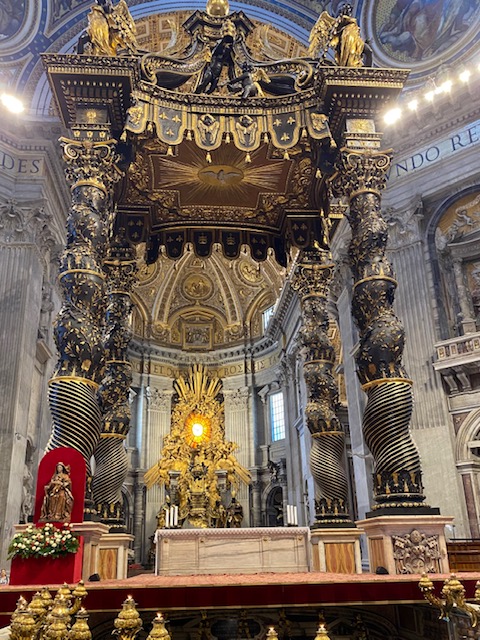
St. Peter’s Basilica altar baldacchino, by Bernini.

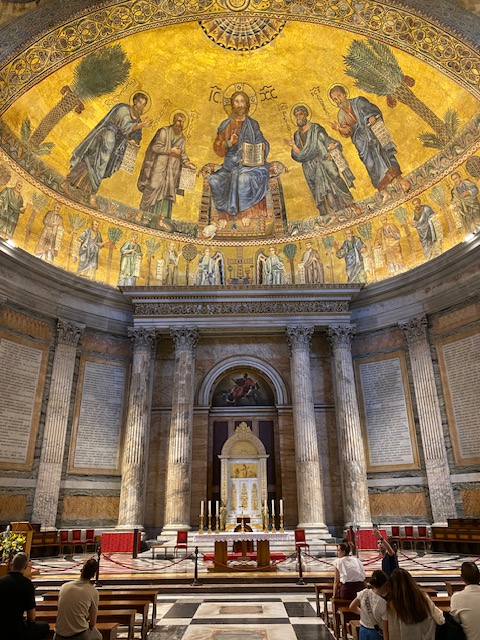
This was my second pilgrimage to Rome, the first being in 2019.  Of course, when you go to Rome, you have to visit the major cathedrals and basilicas in and around the Vatican.  We visited St. Peter’s, St. Mary Major, St. John Lateran, and St. Paul Outside the Walls, all marvelous examples of renaissance architecture and elaborate baroque sculpture and art.  It truly is beautiful beyond words!  However, this year, it was astoundingly beautiful because it is a jubilee year and a boat load of money was spent cleaning and polishing everything.  The skill of the artists, sculptors, and craftsmen, men like Michelangelo, Raphael, Bernini, and so many others, is purely mind blowing!

Domed apse of St. Paul Outside the Walls

It is beautiful, no doubt, but unless you make notes in a journal, It’s almost impossible to remember where a photograph was taken.  And after three or four days of gawking at the grandeur, it all started to run together.  I began to wonder why I was there, what was God’s plan for me?  Was it just to be impressed with the beauty?  No, there had to be more.  The underlying purpose of our pilgrimage was to go deeper in our faith so that we would be inspired to encourage people in our parishes to better evangelize.  Unfortunately, I wasn’t feeling any special inspiration.  So, each day I prayed for an answer to my question, “Why am I here?”

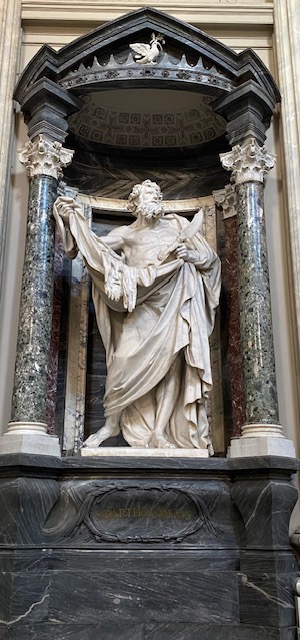
St. Bartholomew holding a knife representing his martyrdom by being filleted alive, at St. John Lateran

One morning we visited the catacombs of St. Calixtus, where, in the 2nd through 4th centuries, nearly a half million Christians were buried, a majority of whom were martyred for opting to profess rather than deny their faith.  It was their courageous faith that convinced so many Roman pagans to convert even knowing that they might be the next to be executed.  As we meandered through a small portion of the 20 kilometers of underground corridors that were lined with now vacant graves stacked eight to ten high, it was easy to imagine the persecutions they endured and all the hideous and creative ways they were tortured.

Catacombs of St. Calixtus

On our last day in Rome we ventured into the city center and visited several minor basilicas within a couple block radius of Piazza Navona, an oval plaza that was once a center for Roman foot and chariot races, as well as for putting Christians to death.  On the piazza sits the minor basilica of St. Agnes, a smaller church but still beautifully adorned with magnificent paintings and sculptures, but specifically of martyrs. 

Altarpiece of St. Agnes in flames, by Ercole Ferrara, 1660.

The church is dedicated to St. Agnes, the 3rd century 12-year old virgin who refused to abandon her faith and succumb to the advances of prominent Roman men.  She was martyred by beheading after attempts to burn her at the stake were unsuccessful. Also honored are St. Emerenziana, Agnes’ sister who was stoned to death for opposing the pagans who were trying to prevent Agnes’ body from being buried; St. Sebastian, a converted Roman soldier who was martyred by being shot through with arrows but not killed, and then thrown into the sewers where he died; and St. Cecilia, a young girl who was discovered to be a Christian and was beheaded. 

Altarpiece of St. Sebastian, by Pietro Paolo Fields, 1719

There, before the statues and relics of St. Agnes and these other martyred saints, with tears running down my cheeks, my prayer was answered.  With unbelievable awe and respect for these martyred faithful men, women, and children, the Holy Spirit convinced me that I was there to fully comprehend what it means to not be afraid to profess one’s faith, so that I could help others to not be afraid.

There, in the moment, I was struck by the relative comparison between these martyrs who risked and sacrificed their lives, and the average Catholic in our world today.  How many Catholics refrain from saying grace before dinner at a restaurant because of what other people might think?  Too many.  How many will not say “God bless you!” to a stranger and mean it because they’re afraid of confrontation?  Again, too many.  How many are afraid of being questioned about their faith because they know they haven’t done what they should do to be properly catechized?  Way too many.  How many are willing to risk asking someone who is obviously hurting if they can pray for them?  Not too many, but too few.  I don’t mean to judge, but generally speaking, we are weak in our faith.  So many have forgotten, if they ever actually knew, what it means to be Christian.  Jesus said, 

“Blessed are they who are persecuted for the sake of righteousness, for theirs is the kingdom of heaven.  Blessed are you when they insult you and persecute you and utter every kind of evil against you [falsely] because of me.  Rejoice and be glad, for your reward will be great in heaven.” (Mt 5:10-12)

Those early Christians – St. Agnes, St. Cecilia, St. Sebastian, St. Emerenziana, and all the martyrs in the catacombs of St. Calixtus – died with hope, hope in the glory of heaven.  They understood it so well that they embraced the prospect of being persecuted and put to death by torturing far worse than a disapproving glance from the diners at the next table over.

Sadly, I get it.  Been there, done that, and got the t-shirt.  But thankfully it doesn’t fit me any more because I’ve learned it’s not hard to overcome that fear.  In fact, the mere chance that I might cause another to ask me about my faith far outweighs the risk.  So, just start.  Start small and go from there.  If someone sneers at you for thanking God for the food you are about to receive, just smile at them and thank the Lord for them, too.  Trust in the Lord to be with you, and pray that you might be the one to inspire someone else to turn to Jesus.  

Remember His words, “Do not fear!”  And resolve to ask yourself every now and then, “Am I just an average Catholic?”, for, if you are to fear anything, it is just that.

“Loving Father, thank You for the gift of faith and for the fortitude to protect and defend that gift.  Nevertheless, You and I know that I need constant strengthening.  May I receive that grace every time I receive You in the Holy Eucharist, remembering the sacrifice You made for me. I ask You Lord, and all the holy martyrs in heaven, to help me and all Your faithful to demonstrate our faith with courage and zeal.  Amen.”

“Are You an Average Catholic?”was first published on the blog Reflections of a Lay Catholic)

©2013-2025 Reflections of a Lay Catholic. Reposting and sharing of material in its full and original content is permitted, provided that full and clear credit is given to the author(s) and Reflections of a Lay Catholic.

Practice Makes Perfect

10 Thursday Jul 2025

Posted by Jerry Robinson in Evangelization

≈ 2 Comments

Tags

Apostles, Evangelization, Faith, Faith sharing, Friendship, Jesus, Mt 10:1-7, Small group

In yesterday’s gospel, Mt 10:1-7, Jesus sent his apostles on mission to announce that the kingdom of heaven is near.  He specifically told them to go to the lost sheep of the house of Israel rather than to pagan territory and Samaritan towns.  This is in contrast to his instructions in Mt 28:19 when, after his resurrection, he commands them to “Go, therefore, and make disciples of all nations…”.  In both cases, Jesus is telling them, and us, to evangelize.  But why the difference?

It seems as though Jesus is giving the twelve a chance to practice evangelizing to those, who, unlike the pagans, already knew the teachings of the law of Moses and the prophets and would be more receptive to their message.  He knew that taking the Word to all nations would be much more difficult.  They needed to start slow and hone their skills along the way.

There is a message here for all of us, too, who, through our baptism, are also obligated to be evangelists on mission.  We need to continuously increase our knowledge and understanding of our faith, and become more skillful at professing it, before we can expect to be proficient at making disciples of all nations.  We need to begin with baby steps.  

The best way to do this is to spend time with our friends in conversation about our faith, discussing the message of the gospel and what it is saying to us. I’m sure the apostles spent time together out of earshot from Jesus discussing all that they were learning, and sharing what it meant to them. By sharing our thoughts and insights in small faith sharing groups, or faith-based conversations over a meal with friends, we strengthen our faith and grow in virtue, and are better prepared to articulate to others His message of salvation.

I’m sure your parish offers opportunities to gather with other men and women in small faith-sharing groups and Bible studies at which you can safely share what it is that you hear God saying to you, and listen to and learn from others about the graces they receive through prayer and service.  But, you don’t have to depend on your parish to organize groups or meetings.  You can simply start from scratch by inviting friends to your house for a meal, spend a relaxing Sunday afternoon getting to know each other better, and interjecting faith based conversation into the experience.  Do this enough and it will become second nature.  Whether you realize it or not, you will be evangelizing each other.  And, you will eliminate the fear that accompanies the prospect of evangelizing to people you don’t know.

“Lord Jesus, thank You for giving me insight into how to become a more effective evangelist, and for Your patience while I learn.  You know I can’t go from zero to sixty in three seconds, but need space and time to accelerate slowly.  You gave Your Apostles three years and even then they hesitated.  I pray for the grace to grab hold of the opportunities to evangelize when You place them before me.  Amen.”

(Practice Makes Perfect was first published on the blog Reflections of a Lay Catholic)

©2013-2025 Reflections of a Lay Catholic. Reposting and sharing of material in its full and original content is permitted, provided that full and clear credit is given to the author(s) and Reflections of a Lay Catholic.
What Month Is It, Anyway?

26 Monday May 2025

Posted by Jerry Robinson in Evangelization

≈ Leave a comment

Tags

Baptism, Confirmation, Devotion, Discipleship, Evangelization, Faith, Good News, Jesus, Mental Health Awareness, Mission, Proclaim the Gospel Message

The Catholic Church’s liturgical seasons fall more or less the same time every year.  Advent in December, and Christmas the last week of December through the middle of January.  Lent usually starts in late February and runs into April.  The 50 days of Easter takes us into late May or early June.  Then, we also have months with special devotions:  May to the Blessed Virgin Mary, October to the Rosary, and November to the Saints and the souls in purgatory.

In the U.S., every month is also set aside to promote awareness to various other worthy causes, e.g.,  Human Trafficking Awareness Month in January, and Suicide Prevention Month in September.  Some months celebrate less serious interests such as National Ice Cream Month in July, and Zombie Awareness month in May.

The month of May is also devoted to Mental Health Awareness.  Yesterday, as in each Sunday Mass this month, one of the petitions mentioned was for all those suffering from mental health issues.  Certainly, this is something we should all pray for.  Our collective prayers are a type of spiritual social outreach.  But it occurred to me there is a petition that I’ve never heard mentioned at my parish church or any other church I’ve ever been to in all my travels – a petition for the faithful to evangelize.

Evangelization is the central mission of the Church.  The proclamation of the Gospel – the saving message of who Jesus is and what He has done for us – is a responsibility we all have by virtue of our baptism and confirmation.  Unfortunately, there are so few who actually take that responsibility seriously.  If we believe our prayers will be heard for those with mental health issues, or for any special interest, then shouldn’t we believe that our prayers for the faithful to muster up the courage to evangelize will be efficacious, as well?  A simple petition such as, “For all the faithful, that they evangelize by proclaiming the Gospel, let us pray…” will at least remind everyone of their role.  Or, we can get bold, and amp it up a notch with, “For each and every baptized Catholic to honor their responsibility by evangelizing at least one person this month and bring them to Jesus, or deeper in their relationship with Him, let us pray…”

If we want to follow and obey our Lord, we have to spread the Good News.  Every month of the year should be Catholic Evangelization Month!  It is that important, not only for the salvation of the souls of those being evangelized, but our own, as well.

“Good and gracious Lord, thank You for loving me.  Please help me and each and every one of the baptized faithful bring others to know Your amazing love, also.  Help us to realize the grace of Fortitude that was bestowed upon us by the Holy Spirit at our Confirmations so that we may be effective evangelizers.  Amen.”

(What Month Is It, Anyway?was first published on the blog Reflections of a Lay Catholic)

©2013-2025 Reflections of a Lay Catholic. Reposting and sharing of material in its full and original content is permitted, provided that full and clear credit is given to the author(s) and Reflections of a Lay Catholic.
Trophies and Spiritual Atrophy

21 Wednesday May 2025

Posted by Jerry Robinson in Evangelization

≈ 6 Comments

Tags

8th Grade graduation, Adult Faith Formation, Confirmation, Evangelization, Faith, Holiness, OCIA, Spiritual Atrophy, trophies, Vice, Virtue, Youth Faith Formation

As I’m writing this, our parish school’s 8th grade class is having its graduation ceremony.  I’m sure our gym is filled with proud parents hardly believing their “baby” boys and girls will soon be high school freshmen; and those same sons and daughters, while also proud and excited, may be having some separation anxiety knowing that they and their friends will disperse to either our public high school or one of four or five nearby Catholic high schools.  

This has been a big year for these youths.  Tonight’s graduation is only two months after they received the Sacrament of Confirmation.  Unfortunately, many of them will consider their Confirmation to be synonymous with their “Catholic graduation”.  Now that they’re confirmed, they see no need for any additional catechesis, scripture study, or even prayer.  Many will begin to exhibit the onset of spiritual atrophy, and in four years, when they go on to college, many will cease practicing their faith.

Yesterday I attended a conference on evangelization at a nearby Catholic church which also has a school.  During a break I ventured into the hallway outside the meeting room and saw that school’s trophy case.  There were years of trophies representing championships and tournament wins for volleyball, basketball, soccer and other sports.  There were photographs, autographed volleyballs, and plaques with player’s names.  And as I admired this memorabilia, I wondered how many of those student athletes still practice their faith.  I thought, “Wouldn’t it be nice if a school had a trophy case that celebrated the graduates who continued to practice their faith in the years to come?  Perhaps they could display bronze medals or plaques for those who continued to be faithful for five years on, silver for ten years, and gold for twenty-five years.”

I was quick to tell myself, though, that the attrition in the faithful is not completely the fault of our Catholic schools or youth faith formation catechists.  Sure, some could be better.  They probably can improve at helping students build a loving and meaningful relationship with Jesus, a faith foundation upon which they will continue to build virtuous lives.  But, of course, there are other factors, as well, such as the pressures of the predominant secular culture that easily leads youths and young adults down paths of vice.  

And, then, there are the parents – what role have they played in instilling a strong faith in their children?  While it’s not a parent’s job to get their kids to heaven, it is their job, and in their control, to give their kids holy parents.  Have they provided an attractive example of how an adult lives a life of holiness?  Again, I checked myself so as to not put too much blame on the parents.  Many have good intentions.  The problem may not be with a lack of desire to lead their children deeper in faith, but that they can’t lead them past the point at where they are themselves.

I couldn’t help but see the hand of God in these thoughts.  There I was at a conference on how to evangelize adults, and because of a simple trophy case, I became fully aware that none of this is the kids fault, rather it is an adult problem.  Somewhere along the line we’ve lost the connection that the only way our children will develop and maintain a healthy life of faith is if us adults teach, guide, mentor and reinforce what that life looks like.  The teachers, the youth catechists, and the parents are all adults, and while youth faith formation is important, it is secondary to adult faith formation.  And to form adults who will form our youths, we need adult evangelists who will step forward and fill this void.  We need catechists for OCIA, competent leaders for Bible studies, willing facilitators to participate in adult faith formation programs, and spiritual mentors who will guide other adults to living lives of deeper prayer that will help them grow in holiness.  

I went back into the conference after the break with a renewed sense of determination.  I know I don’t have all the answers, but as our parish’s Director of Evangelization, there is an onus that goes with wearing that hat, a responsibility to put into place ways to lead people into a deeper relationship with Jesus that will move them along the pathway from minimal maintenance to missionary discipleship.

“Heavenly Father, I give You thanks for your trust in me, that my participation will bear fruit for Your Kingdom.  Inspire me, Lord, to evangelize other men and women to be Your disciples who will lead others closer to You.  And I pray that You will put in the lives of our children who have fallen away from the faith someone who will inspire them and bring them home.  Amen.”

← Older posts

Enter your email address to follow this blog and receive notifications of new posts by email.

Join 264 other subscribers
Follow Reflections of a Lay Catholic on WordPress.com

Recent Posts

  • Mystogogy – It’s Not Just for Neophytes
  • How Will You Live Eastertide?
  • My “Re-Birthday”
  • Jesus and the Woman at the Well
  • Welcoming the Stranger

Categories

Top Posts & Pages

  • Wants and Needs
  • The Good Shepherd
  • Miracles
  • Conversions
  • ASK A PRIEST - CAN ATHEISTS GO TO HEAVEN?
  • A Confessional Curveball
  • Without Cost You Have Received; Without Cost You Are To Give
  • Happy New Year!
  • St. Anthony of Padua - Patron Saint for the Recovery of Lost and Stolen Items
  • A Sedevacantist Catholic Church in Lebanon, OH

Archives

  • April 2026
  • March 2026
  • February 2026
  • January 2026
  • September 2025
  • August 2025
  • July 2025
  • May 2025
  • April 2025
  • February 2025
  • January 2025
  • December 2024
  • November 2024
  • September 2024
  • July 2024
  • May 2024
  • April 2024
  • March 2024
  • February 2024
  • January 2024
  • December 2023
  • November 2023
  • October 2023
  • September 2023
  • August 2023
  • June 2023
  • May 2023
  • April 2023
  • March 2023
  • February 2023
  • January 2023
  • December 2022
  • November 2022
  • October 2022
  • September 2022
  • June 2022
  • May 2022
  • April 2022
  • March 2022
  • February 2022
  • January 2022
  • November 2021
  • July 2021
  • June 2021
  • May 2021
  • April 2021
  • March 2021
  • February 2021
  • January 2021
  • November 2020
  • October 2020
  • September 2020
  • August 2020
  • July 2020
  • May 2020
  • April 2020
  • March 2020
  • January 2020
  • December 2019
  • November 2019
  • September 2019
  • July 2019
  • June 2019
  • May 2019
  • April 2019
  • March 2019
  • January 2019
  • December 2018
  • November 2018
  • October 2018
  • September 2018
  • August 2018
  • July 2018
  • June 2018
  • May 2018
  • April 2018
  • March 2018
  • February 2018
  • January 2018
  • December 2017
  • September 2017
  • August 2017
  • July 2017
  • June 2017
  • May 2017
  • April 2017
  • March 2017
  • February 2017
  • December 2016
  • November 2016
  • October 2016
  • September 2016
  • August 2016
  • July 2016
  • April 2016
  • March 2016
  • January 2016
  • December 2015
  • November 2015
  • September 2015
  • August 2015
  • July 2015
  • June 2015
  • May 2015
  • April 2015
  • March 2015
  • February 2015
  • January 2015
  • December 2014
  • November 2014
  • October 2014
  • September 2014
  • August 2014
  • July 2014
  • June 2014
  • May 2014
  • April 2014
  • March 2014
  • February 2014
  • January 2014
  • December 2013
  • November 2013
  • October 2013
  • September 2013
  • August 2013
  • July 2013
  • June 2013
  • May 2013
  • April 2013
  • March 2013
  • February 2013

Meta

  • Create account
  • Log in
  • Entries feed
  • Comments feed
  • WordPress.com

©2013 – 2026 Reflections of a Lay Catholic. Reposting and sharing of material in its full and original content is permitted, provided that full and clear credit is given to the author(s) and Reflections of a Lay Catholic.
Create a free website or blog at WordPress.com.

  • Subscribe Subscribed
    • Reflections of a Lay Catholic
    • Join 264 other subscribers
    • Already have a WordPress.com account? Log in now.
    • Reflections of a Lay Catholic
    • Subscribe Subscribed
    • Sign up
    • Log in
    • Report this content
    • View site in Reader
    • Manage subscriptions
    • Collapse this bar
 

Loading Comments...