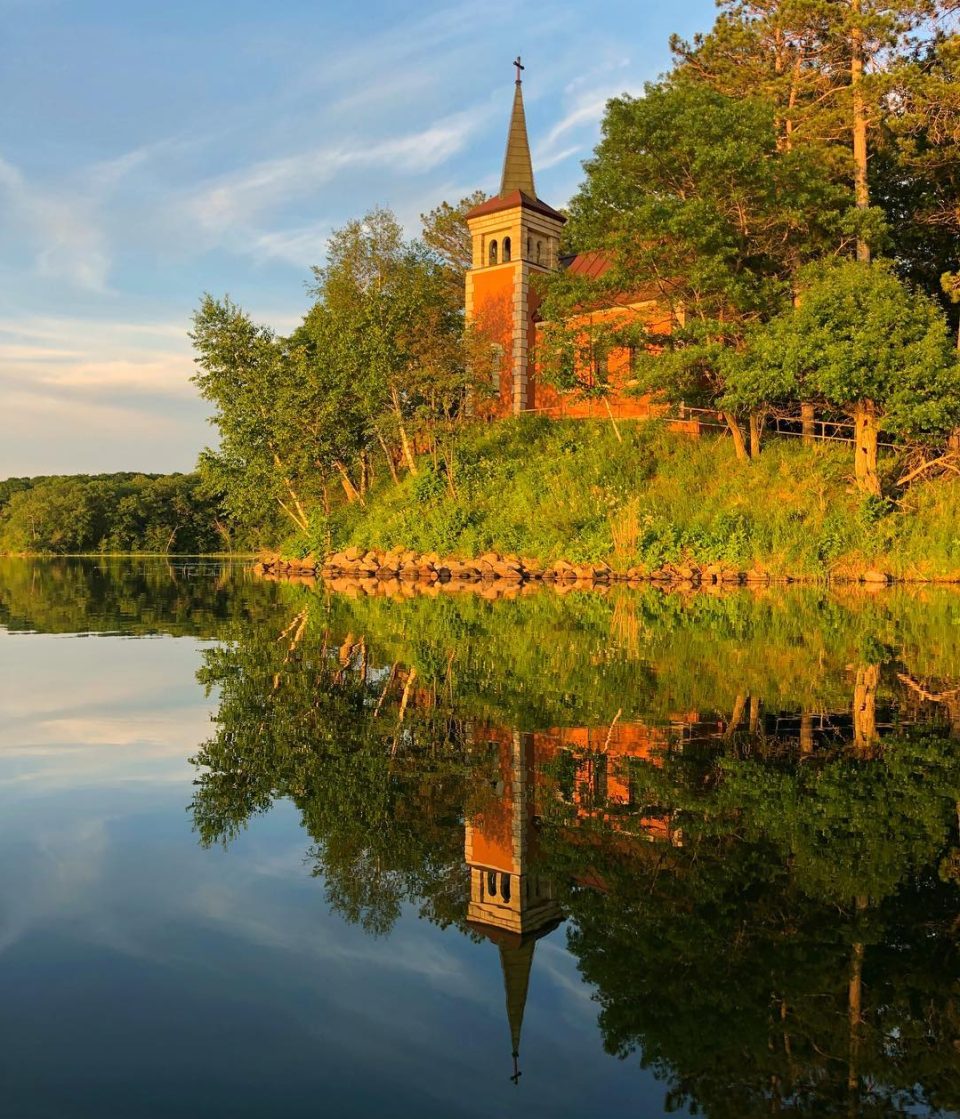
Fear is Easy, Love is Hard (1) / Nothing is Wasted (2)

Tags

, , ,

“Turn on the T.V. for the evening news / They got plenty of fear and nothing to do / Another somebody’s gone too far / Makes you want to put up your guard / Fear is easy, love is hard”.

These song lyrics by Christian singer/songwriter Jason Gray came over my car stereo this evening as I was in the middle of a two-hour drive on a business trip.  The sadness in them could not have been more appropriate or timely.  Like most every other American on this fifteenth day of April, 2013 my mind was on the senseless terroristic acts of violence that unfolded today in Boston, Massachusetts during the Boston Marathon.  I intentionally chose not to listen to any more news reports – I had heard enough and nothing they said could change what had happened.  My thoughts vacillated between anger at whoever was responsible for the death and destruction, and heartfelt sympathy for all the human beings who were tragically affected.  It was painful to think in the present.

It was no less painful when flashback images and emotions from September 11th, 2001 coursed through my heart and mind’s eye.  But, one of the advantages of my age is in understanding that history tends to repeat itself and, thus, if you pay attention and learn as you go, you are better prepared for when evil will again, inevitably, raise its ugly head.  I no longer believe in coincidence, so when the next song on the CD, Nothing is Wasted, came up I smiled for the first time in a couple hours:

“The hurt that broke your heart / And left you trembling in the dark / Feeling lost and alone / Will tell you hope’s a lie / But what if every tear you cry / Will seed the ground   where joy will grow / And Nothing is Wasted / It’s from the deepest wounds / That beauty finds a place to bloom / And you will see before the end / That every broken             piece is / Gathered in the heart of Jesus / And what’s lost will be found again / And Nothing is Wasted….”

There’s no doubt we Americans have been down this road before.  To forget or not use what we learned almost twelve years ago would indeed be a waste.  So, my thoughts turned to the future and I wondered, “What are we going to do about this?”  I’ve learned there are many things about which I can do absolutely nothing.  How to tackle the issue of terrorism is one of those things.  Our government is supposed to do that for us.  A terrorist’s most lethal weapon is their hatred for what is good and just, and the primary goal of terrorism is to spread fear and that same hatred.  Their bombs are simply a means to that end.  Let the government figure out how to stop them from using their physical weapons.

But, as citizens, and Christians, we have learned we can do something. We have to take the hard road, the difficult task of ensuring our spirit is not broken.  We have to stand up to the cowardice of terrorism with the courage to continue what is right and just in accordance with our faith.  We can be there for each other.  We can love each other.  We can support and encourage each other.  We can pray for those who have suffered and who are suffering.  (Psalm 147:3 “He heals the broken hearted and binds up their wounds”)  We can pray for those who are fearful and help them overcome their fear by finding love in the only one Who has enough love for all of us (Isaiah 41:13 “For I am the Lord your God who grasps your right hand; It is I who say to you, ‘Do not fear, I will help you’”).  And, by doing so, we can send a clear message that, even though we may have been set back a step or two, we won’t be knocked out by the one-two punch of fear and hatred. We’re not going to take the low, easy road, we’re going to take the hard, high road.  We did it almost twelve years ago and we can do it again. And, finally, we can do what is feared most by our enemy, “Pray for those who mistreat you” (Luke 6:28).

“When fear is easy and love is hard / It’s hard to bring your heart to a world that can break it / To offer love to those you’re afraid will forsake it / But a well defended heart is always looking for a fight / In a lonely war against an endless night / But love can bring a light / …It comes down to a simple choice / Shouting devils or a still small voice / One is spreading fear and dread / Oh, but love has always said / Do not be afraid / Fear is easy and love is hard.”

 Thank you, Jason Gray, for your beautiful insight!  I hope you don’t mind me borrowing some of it.

Peace be with you all, and with your spirit.

1.         Fear is Easy, Love is Hard, Jason Gray (A Way to See in the Dark), © 2011 Centricity Music Publishing (ASCAP) / Nothing is Wasted Music (ASCAP) / The Gullahorns Music (ASCAP)
2.         Nothing is Wasted, Jason Gray (A Way to See in the Dark), © 2011 Centricity Music Publishing (ASCAP) / Nothing is Wasted Music (ASCAP)

How we respond to Prayer Request

Tags

Image

I often get prayer requests from friends or friends of friends similar to this one:

“A Co-worker of mine has a son Oliver who has been diagnosed with a tumor in his brain that is in-operable. Listed below is a description of his condition. He will most likely be starting radiation on Monday the 22nd, and will be (hopefully) outpatient, taking only 1.5 hours each day Mon-Fri for 6-7 weeks.  The chemo and other meds will start a couple weeks into the radiation treatment and continue on beyond. Please send out a request for prayers for Oliver.”

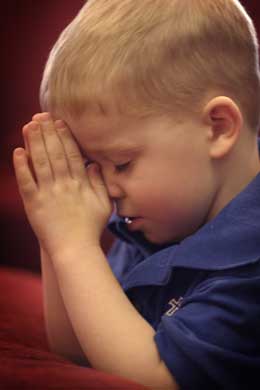
Typically, my immediate response is to send a quick reply of sympathy and an offer to pray, and then I offer up an immediate prayer for the intention I just received. I do this because I believe in the efficacy of prayer and because I know myself well enough to understand that if I don’t offer the prayer immediately on the spot, I will forget to include the intention later during my personal prayers. But I have friends who do much better and have the ability to offer more of themselves. Mike, a dear friend of mine, will often say a rosary and fast for people he doesn’t know, but for whom he has been asked to pray. Jim, the spiritual Godfather of our men’s group, recently commented that he writes down those he has been asked to pray for so he has the list ready when he prays. He said it is in those quiet, prayful moments that God speaks to him. God speaks by giving Jim an inkling of what the person needs, or what may offer the person comfort in their time of need, and Jim responds. Jim asks the Lord to help those in need, but also offers himself up as an instrument of God’s grace and love.

It is the response that I find telling. Jim and Mike offer more of themselves than just a hurried prayer. They openly offer themselves to God as humble servants for the benefit of their neighbor in need. It is a beautiful testimony to how we are called to be brothers and sisters in faith and to minister to each other. The truth is that they are not only helping the person in need more, but they are both getting much more in return by being true servants of Christ. They are great role models for me.

Scripture tells us that the efficacy of prayer involves the action of the Holy Spirit: Luke 6:13.

The Catechism of the Catholic Church states that:

“Christian prayer is a covenant relationship between God and man in Christ. It is the action of God and of man, springing forth from both the Holy Spirit and ourselves, wholly directed to the Father, in union with the human will of the Son of God made man.” [67] “The Holy Spirit who teaches the Church and recalls to her all that Jesus said also instructs her in the life of prayer, inspiring new expressions of the prayer: blessing, petition, intercession, thanksgiving and praise.”[68] “Christian prayer is a communion of love with the Father, not only through Christ but also in him“. “The father gives us when our prayer is united with that of Jesus ‘another Counselor, to be with [us] for ever’, the Spirit of Truth.” [69] “The [Holy] Spirit helps us in our weakness; for we do not know how to pray as we ought, but the Spirit himself intercedes with sights too deep for words.” [70]
“One enters into prayer by the narrow gate of faith. It is the face of the Lord that we seek and desire; it is his Word that we want to hear and keep”[71] “Once committed to conversion, the heart learns to pray in faith. Faith is a filial adherence to God beyond what we feel and understand. It is possible because the Son gives us access to the Father. He can ask us to ‘seek’ and to ‘knock’, since he himself is the door and the way.[72]
I can only hope to learn from my brothers in faith and enter into deeper, more meaningful prayer. Christ himself prayed constantly; there is no better role model. In his book A Call to Joy, Living in the Presence of God, Matthew Kelly says that the change that had the greatest effect of his life was that he started to really pray. “Over time it became clear to me that the greatest act available to us is to be like God–to imitate Christ the perfect man. I had always been taught that to aim for perfection in whatever I did was good and noble. Why shouldn’t I aim to perfect my whole person?” (26). While we all fall short of perfection, Kelly is correct that the endevor for perfection is not only noble, but it is our calling. We are called to be Christ like. But only through prayer and the grace of God can we grow. “The [Holy] Spirit helps us in our weakness; for we do not know how to pray as we ought, but the Spirit himself intercedes.”

A Monk’s Chronicle: 15 April MMXIII — The Dictator and the Doubter

Father Eric Hollas, OSB

Father Eric Hollas, OSB

monkschronicle's avatarA Monk's Chronicle

photo (73)The Dictator and the Doubter

Travel has its surprises, and certainly one of the biggest for me happened on a trip to Albania three  years ago.  Our small group had come to Albania more as an afterthought than as a destination, and it did not fall short of our expectations.  Albania may have been a vibrant place once upon a time, but Communist dictator Enver Hoxha had taken care of that.  In his forty-year reign he had convinced his citizens that their country was the envy of the world, and he left the countryside dotted with pillboxes and airfields to defend against invaders coming from every direction.  He also left the country impoverished and dispirited.  But during his rule the isolated citizens knew no better, and the cult of his personality allowed for no other domestic or foreign gods.

When our guide announced a visit to the National Museum, we…

View original post 1,217 more words

April 14th 2013 – 3rd Sunday in Easter

St. Paul Center For Biblical Theology.

Fire of Love

Readings:
Acts 5:27-32,40-41
Psalm 30:2,4-6,11-13
Revelation 5:11-14
John 21:1-19

There are two places in Scripture where the curious detail of a “charcoal fire” is mentioned.
One is in today’s Gospel, where the Apostles return from fishing to find bread and fish warming on the fire.

The other is in the scene in the High Priest’s courtyard on Holy Thursday, where Peter and some guards and slaves warm themselves while Jesus is being interrogated inside (see John 18:18).

At the first fire, Peter denied knowing Jesus three times, as Jesus had predicted (see John 13:3818:15-1825-27).

Today’s charcoal fire becomes the scene of Peter’s repentance, as three times Jesus asks him to make a profession of love. Jesus’  thrice repeated command “feed My sheep” shows that Peter is being appointed as the shepherd of the Lord’s entire flock, the head of His Church (see also Luke 22:32).

Jesus’ question: “Do you love me more than these?” is a pointed reminder of Peter’s pledge to lay down his life for Jesus, even if the other Apostles might weaken (see John 13:37Matthew 26:33Luke 22:33).

Jesus then explains just what Peter’s love and leadership will require, foretelling Peter’s death by crucifixion (“you will stretch out your hands”).

Before His own death, Jesus had warned the Apostles that they would be hated as He was hated, that they would suffer as He suffered (see Matthew 10:16-19,22John 15:18-2016:2). We see the beginnings of that persecution in today’s First Reading. Flogged as Jesus was, the Apostles nonetheless leave “rejoicing that they have been found worthy to suffer.”

Their joy is based on their faith that God will change their “mourning into dancing,” as we sing in today’s Psalm. By their sufferings, they know they will be counted worthy to stand in heaven before “the Lamb that was slain,” a scene glimpsed in today’s Second Reading (see also Revelation 6:9-11).

Scholar says European fight against porn shows depth of problem :: (CNA)

Tags

Scholar says European fight against porn shows depth of problem

Catholic News Agency (CNA).

By Carl Bunderson
Reykjavik, Iceland. Credit: Mark Turner (CC BY-NC-SA 2.0).

Denver, Colo., Apr 11, 2013 / 04:08 am (CNA/EWTN News).- Recent public efforts to oppose pornography in two European countries reveal that porn is problem not only for religious reasons but universal human reasons, according to a professor.

“The hyper-sexualization of children, the constant exposure of children to these very sexual images…is very damaging to their image of themselves and of what their potential future relationships are supposed to be like,” Dr. Susan Selner-Wright, a philosophy professor at St. John Vianney Theological Seminary in Denver, Colo., told CNA.

Her remarks come as Iceland’s legislative and executive branches are considering bans on internet pornography in the country out of concerns about the effects on children of having been exposed to violent pornography.

In the U.K., the teachers’ union Association of Teachers and Lecturers recently advised that students be warned of pornography’s risks and its abnormal depictions of sexuality – a move Selner-Wright called  “spot on.”

“We are noticing a much more explicit vocabulary emerging and types of games amongst the very young that are quite sexually explicit,” Alison Sherratt told her fellow teachers at the conference, according to the BBC.

Speaker Helen Porter added that “it is crucial that youngsters develop an understanding of sex in the media and pornography, so that they can recognize the abnormal nature of these sexual expectations and appreciate the dangers of accepting the values portrayed by the sexualized media.”

Iceland has banned strip clubs and forbids the printing and distribution of pornography in the nation, but it has not yet dealt with pornography on the internet.

Efforts to ban access to it stem from concerns for the civil rights of women and children, particularly focusing on children’s exposure to violence in pornography.

Selner-Wright explained to CNA that while humans “have a natural tendency toward relationship with each other,” a problem now is that “people have become so reductive, that they see all relationships in terms of sexual relationships.”

In the media, intense relationships are presented as sexual, and intimacy has been replaced by sexuality, the professor observed.

“In film and TV, we’ve really lost the category of a non-sexual but really important human relationship,” she reflected. But “the fact is, that most of our relationships are not meant to be sexual. It’s really is a huge force for loneliness.”

“If you think the only category for me to have an intense relationship is a sexual one, then that means that almost all the relationships I could have, now have to be superficial.”

“If we buy into this idea that all intense relationships are sexual, then we’ll start having sex early, often, and with a bunch of different people, and we’ll ultimately lose our capacity to have a really meaningful and peculiarly sexual relationship.”

Pornography, Selner-Wright said, “really is the objectification of whoever the images are of…it’s the reduction of those women to their sexuality, it’s one-dimensional: the only important thing about the woman in the image is in what way is she sexually arousing.”

Speakers at the U.K.’s  Association of Teachers and Lecturers conference agreed that children are being de-sensitized to the objectification of women and of themselves. “They are routinely taking sexual photographs of themselves and sending them to others,” said teacher James Schlackman.

“It’s radically disrespectful of the wholeness of whoever’s image it is,” Selner-Wright added, “and even if the person whose image it is agrees to have themselves displayed this way…they are objectifying themselves, they’re disrespecting themselves.”

Addressing pornography in terms of human rights, she said that human persons “have a right not to be reduced to their sexuality, and that’s’ a right you hold even in relation to yourself. It’s an inalienable right.”

Iceland is concerned about pornography and strip clubs out of a concern for the rights of women and children, and is unique among European countries in pursuing a ban of pornography. Selner-Wright expressed hope that Icelandic legislators don’t “lose their nerve” in their fight.

“There’s a lot more to any human being than their sexual arousing-ness, and when they are reduced to that, that’s a fundamental violation of their nature, which then is inevitably going to have a lot of repercussions.”

“We’re reaping them: in broken relationships, in the explosion of single parent households, in this real disconnect between marriage and children. All of that is fruit of that misunderstanding of (human) nature,” she explained.

My First Easter Vigil Mass

Tags

, , ,

I attended my very first Easter Vigil Mass this year.  It was a beautiful ceremony, one I will never forget.  My youngest daughter was a lector and as she read a passage from St. Paul’s letter to the Romans more than a couple tears of pride leaked from my eyes.  The rest of my family and dozens of close friends were there with me.  From my vantage point, witnessing the mystery unfold from the front row was especially meaningful – the night marked the culmination of six months of study as a catechumen for RCIA, and almost a year’s worth of intense faith formation in other ministries.  And, even though the guest of honor was the risen Christ, it was a special night for me.  In two hours I would be Catholic.

Ever since my heart was filled with the Holy Spirit at a Christ Renews His Parish retreat weekend a year ago, I had been waiting for this day.  The many friends who supported me during this journey had painted pictures in my mind of how I would feel upon my initiation into the Church.  They depicted various versions of relief and freedom from sins forgiven, of togetherness with the community, and of elation for having ultimately received Christ through the Holy Eucharist.

Thus, for most of the past year I had eagerly anticipated all these notions.  I say “most” because about a month ago I started to get worried.  Not worried in the sense that I was making the wrong decision, rather, worried that I wouldn’t feel the way everyone said I would feel.  I asked myself, “What will it mean if I am not overcome with emotion when I am baptized and my sins are forgiven?  What will it mean if I don’t feel as though I am momentarily in Heaven with Jesus as I receive His body and blood for the first time?”  I didn’t know the answers and a sense of panic started to creep in.

Sometimes when I pray, I truly feel as if I’m in the Lord’s presence.  But other times I don’t feel that way.  “What if this turns out to be one of those other times?”  I was beginning to question the strength of my faith.  I confided with my good friend, sponsor and Godfather about my feelings and he calmly advised that not everyone is reduced to falling on their knees and bawling when baptized.  Nor are they always in some out-of-body state of euphoria when receiving first communion.  He said he had faith that I will feel like a new person regardless of how I choose to describe it.  He’s a spiritual man and I love him dearly.  But, I still worried, “What if I don’t?”

Holy Saturday arrived and I had not yet found the confidence I needed to override my fears.  I arrived at church Saturday morning for the Morning of Reflection and rehearsal for the evening’s ceremony.  There were three pieces of unfinished RCIA business needing attention, the last of which was the Ephphetha Rite.  Father conducted the rite and explained that it is also known as the rite of opening the ears and mouth, that it is to impress upon the elect their need for grace in order that they may hear and profess the word of God.  The rite included reading Mark 7:31-37 – The Healing of a Deaf Man:

“(33) …. He put his finger into the man’s ears and, spitting, touched his tongue; (34) then He looked up to heaven and groaned, and said to him, “Ephphetha!” (that is “Be opened!”); (35) And immediately the man’s ears were opened, his speech impediment was removed, and he spoke plainly.  (36) He ordered them not to tell anyone.  But the more He ordered them not to, the more they proclaimed it”

Of course, curiosity was killing me.  Why would Jesus cure a man’s deafness and dumbness only to order him to not tell anybody?  So, I asked Father and he explained that Jesus didn’t want people flocking to him looking for one-sided deals and quick cures.  Instead, He wanted some shared responsibility, some skin in the game, in the form of having faith in Him.  Jesus understood that people who learned of His healing miracles through hear-say would not have the same understanding and appreciation as would the healed person.  In other words, through the depth of one’s faith, people will perceive, realize and accept the grace of God in different ways.

Voila, there was my answer!  In that moment I realized I had let the good intentions of others define how I should feel when, in His presence, I offer myself up to Him, He wipes my slate clean of sin, and He offers Himself to me.  And, I realized I had forgotten what Paul said in Romans 4:16, “….it depends on faith, so that it may be a gift…”.   I had let other people’s feelings become paramount to my own faith, replacing the real reason I was looking forward to this night as much as I’d ever looked forward to anything:  to experience Jesus up close and personal, and to tell Him that I love Him with all my heart and I know He loves me with more love than I can ever hope to muster.  With twelve hours to spare, I was finally worry free and ready to go.

So, how did I feel and react Saturday night upon being baptized, confirmed and receiving my first communion all at once?  Well, so as to not influence others with my feelings, suffice it to say that it was good, very good, slightly different, but better, than I thought it would be, and in a very satisfying way.  And, even now, several days later, I am still trying to fathom the overwhelming feelings of happiness, gratitude, freedom, peace, love and community I have had since I became “new”.  I should have trusted my Godfather to know what he was talking about. Even more, I should have trusted in the Lord that He would make everything perfect in a way that is perfect just for me.

(The post My First Easter Vigil Mass first appeared in Reflections of a Lay Catholic)

Spiritual Leadership of the Family

Tags

At a Christ Renews His Parish (CRHP) weekend in October 2012, I read the following passage from Philippians 2:1-11 to all men in the room:

“If then there is any encouragement in Christ, any consolation from love, any sharing in the Spirit, any compassion and sympathy, make my joy complete: be of the same mind, having the same love, being in full accord and of one mind. Do nothing from selfish ambition or conceit, but in humility regard others as better than yourselves. Let each of you look not to your own interests, but to the interests of others. Let the same mind be in you that was in Christ Jesus, who, though he was in the form of God, did not regard equality with God as something to be exploited, but emptied himself, taking the form of a slave, being born in human likeness. And being found in human form, he humbled himself and became obedient to the point of death— even death on a cross.  Therefore God also highly exalted him and gave him the name that is above every name, so that at the name of Jesus every knee should bend, in heaven and on earth and under the earth, and every tongue should confess that Jesus Christ is Lord, to the glory of God the Father.”

I chose this passage because it continued my witness theme of servant leadership.  In the secular world we think of leadership as telling people what to do and how to do it.  We expect people to follow us and meet our needs.  But a servant leader is just the opposite.  Our obligation is to find out what our family needs and and strive to meet those needs.  We should determine both their spiritual and physical needs.  Most importantly, however, are their spiritual needs.  There is no “one size fits all” for spiritual needs.  Some of our wives/families may need us to spend more time in prayer with them.  Some may want us to attend Mass more often.  Others may need us to encourage them to more ferverently pursue their faith.  For example, recently my wife was asked to take on a long-term leadership role of the women’s CRHP program.  While she may have had doubts about her fitness for the role, I believed that it was the right position for her because it would put her in a position to build up her faith and effect the faith journeys of other women.  So, I encouraged her to take the position and she did.

Our faith journeys are individual choices hopefully supported by our families and our faith/parish community.  We may not all share the same specific religious affiliation but I know we do share the same faith in God and our savior Jesus Christ.  Again, another personal example… One of my seven sisters and her husband are not Catholic.  However, they are two of the most God loving/worshiping people I know who have raised an outstanding son.  Joe is a true servant leader to my sister and their son.  When I start to get lazy in my leadership I look to Joe as my model.  When we spend time together discussing “religion,” we emphasize our common areas of faith rather than any differences in worship practices.  Reflecting on that last sentence, I really should do a better job building up that relationship.

To close this out, how can we be better spiritual leaders in our home?  My answer is that our needs must die to the needs of our family.  Jesus Christ literally died for us so that we might have a chance for eternal life.  The very least we can do is allow our needs to die to the greater spiritual needs of our family.  Spiritual leadership is encouraging our wives and family in the pursuit of a deeper relationship with God in whatever way they find most meaningful.

Pope Francis and the Mandatum rite

After the homily, the Pope washed the feet of twelve inmates of the Casal del Marmo youth detention center. Two of them were girls, one Italian and one from Eastern Europe. The Pope put on an apron made by the children of Villa San Francesco, Belluna from cloth that came from the Holy Land. The moment of the foot washing was very moving. The Pope knelt down six times. Each time he washed the feet of two youths sitting side by side. The Holy Father washed, rinsed, dried and then kissed one of the feet of each youth.


There has been an interesting discussion on the bloggisphere about Pope Francis’s choice of washing feet of boys and girls. See the post by Dr. Peter’s below: 

Popes, like dads, don’t have a choice in the matter

by Dr. Edward Peters

Pope and dads set examples whether they want to or not. If I have dessert despite not having finished my supper, my kids do not experience that family rule as something presumably oriented to their welfare, but rather, as imposition to be borne until they, too, are old enough to make and break the rules. Now, none will dispute that Pope Francis has, by washing the feet of women at his Holy Thursday Mass, set an example. The question is, what kind of example has he set?

As a matter of substance, I have long questioned the cogency of arguments that the Mandatum rite should be limited to adult males (a point lost on Michael Sean Winters in his recent nutty over a Mandatum-related post by Fr. Z that linked to my writings on the subject). But I have never doubted that liturgical law expressly limits participation in that rite to adult males, and I have consistently called on Catholics, clerics and laity alike, to observe this pontifically-promulgated law in service to the unity (dare I say, the catholicity) of liturgy (c. 837). Pope Francis’ action today renders these arguments moot. Not wrong, mind. Moot.

By disregarding his own law in this matter, Francis violates, of course, no divine directive, nor does he—to anticipate an obvious question—achieve the abrogation of a law which, as it happens, I would not mind seeing abrogated. What he does do, I fear, is set a questionable example at Supper time.

We’re not talking here about, say, eschewing papal apartments or limousines or fancy footwear. None of those matters were the objects of law, let alone of laws that bind countless others. (Personally, I find Francis’ actions in these areas inspiring although, granted, I do not have to deal with complications for others being caused by the pope’s simplicity).

Rather, re the Mandatum rite, we’re talking about a clear, unambiguous, reasonable (if not entirely compelling or suitable) liturgical provision, compliance with which has cost many faithful pastors undeserved ill-will from many quarters, and contempt for which has served mostly as a ‘sacrament of disregard’ for Roman rules on a variety of other matters. Today, whether he wanted to, or not, Francis set the Catholic world an example, about solidarity with outcasts, certainly, and about regard for liturgy.

A final thought: we live in antinomian times. One of the odd things about antinomianism (a condition that, by the way, does not always imply ill-will in its adherents though it usually implies a lack of understanding on their part) is that antinomianism makes reform of law not easier but harder: why bother undertaking the necessary but difficult reform of law when it’s easier simply to ignore it?

It’s a question with reverberations well beyond those of a foot-washing rite.

Dr. Edward Peters | March 28, 2013 at 3:45 pm | Categories: Uncategorized | URL:http://wp.me/p25nov-AC
 
Never-the-less, I believe that the following blogger gets it right: 
bposullivan says:

After Jesus washed the apostles’ feet, he said “you also should wash one another’s feet. I have set you an example that you should do as I have done for you.” So, isn’t the question how to interpret the phrase “one another’s”? Did he really just mean that each apostle should wash the feet of other apostles to demonstrate that they loved and served each other, within that small group? Wouldn’t it make more sense to believe that he was commissioning them to wash the feet of their fellow Christians, more broadly? It seems to me that to follow his example would mean showing their love and service, as Jesus had done, to those who followed them in the faith. And why couldn’t that include women? In other words, maybe the foot-washing at the Mass of the Last Supper isn’t a reenactment of Jesus washing the feet of his disciples; it’s a new enactment of what He said to do, which was to follow his example and share his sign of love and service with the wider world.


Where Catholics Stand on Bishops, Pope, Birth Control

By the Numbers: Catholics in America
By SARAH PARNASS
Feb. 28, 2013
abcnews.go.com
ABC News

Where Catholics Stand on Bishops, Pope, Birth Control

By the Numbers: Catholics in America – ABC News.

With Pope Benedict XVI’s departure, Catholics will soon have a new leader, who will no doubt hold sway over a good chunk of American voters.

Catholics have made up a significant portion of the United States since the end of the 19th century, when Irish Catholics set sail for America to escape famine, according to the National Humanities Center. Around that same time, more than a quarter of Italy’s population left its native land to find work in America, the “vast majority” of whom were Catholic, according to the American Immigration Law Foundation. Today, Catholics make up about a quarter of the U.S. population.

Current political leadership includes several prominent Catholics: Vice President Joe Biden, House Speaker John Boehner, House Minority Leader Nancy Pelosi, Senate President Pro Tempore Patrick Leahy and Senate Majority Whip Dick Durbin.

But it’s impossible to predict how Catholics will vote, and where they’ll vary on what their church leader decrees. Read on to see how America’s Catholics break down, by the numbers.

78.2 million

Self-identified Catholics in America, about a quarter of the country’s population (Georgetown University, 2012).

About 2 million

Number of children in Catholic schools in the U.S. (Georgetown University, 2012).

83 percent

American Catholics satisfied with nuns and sisters (Pew, November 2012).

82 percent

American Catholics who said birth control was “morally acceptable” (Gallup, May 2012).

74 percent

American Catholics satisfied with Pope Benedict XVI (Pew, November 2012).

63 percent

White American Catholics who support repealing the ban against gays joining the Boy Scouts of America (Quinnipiac University, February 2013).

62 percent

American Catholics who favor stricter gun laws (Public Religion Research Institute, August 2012).

50 percent

Catholics who voted for President Obama in 2012, compared with 48 percent for Mitt Romney (Pew, November 2012).

49 percent

White American Catholics who support same-sex marriage, compared with 43 percent who oppose it (Quinnipiac University, December 2012).

One-third

Catholics who wished their pastor or bishops would blog (Georgetown University, November 2012).

32 percent

Catholics who own guns in America (Public Religion Research Institute, August 2012).

Six

Number of Supreme Court Justices who are Catholic. The other three Justices are Jewish.

One

Number of American presidents who have identified as Catholic – John F. Kennedy. Also number of Catholic American vice presidents – Joe Biden.